Chicken korma calories: cup/katori and 100 g
Also called murgh korma and chicken kurma.
By Shivam Verma Updated 10 sources linked below
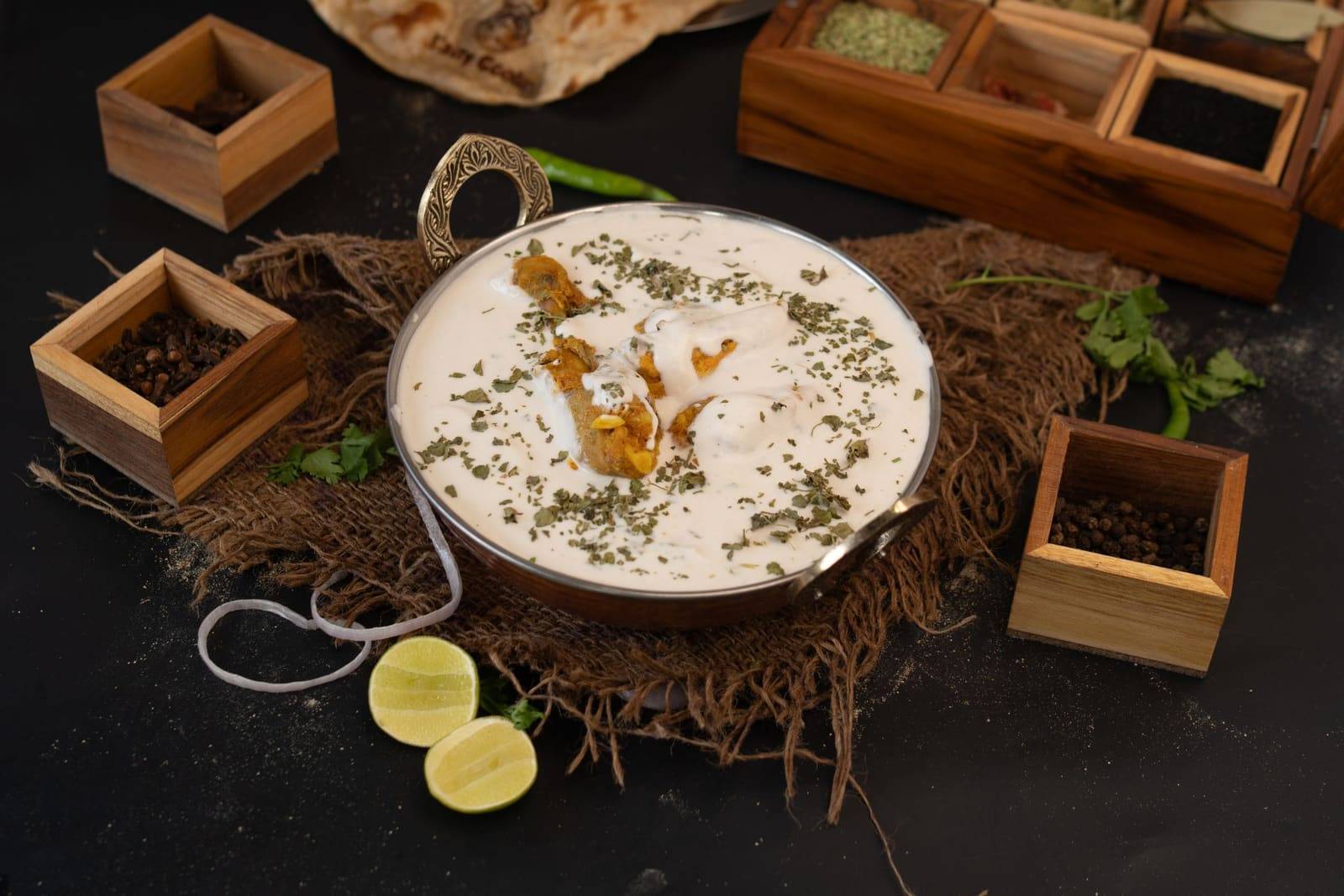
One katori (150 g) of restaurant chicken korma has about 281 calories, 15.9 g of protein and 21.4 g of fat. One cup (240 g) has about 449. Made at home with more curd and less cream it is 211 a katori, and a UK takeaway style katori is 352.
281calories
Protein
15.9 g
Carbs
6.7 g
Fat
21.4 g
1 cup = a 240 ml US cup of the dish as served. UK, Canadian and Australian cups are 250 ml: add about 4%.
Founding 500
Your bowl is not exactly 150 g.
Katori is an iPhone app that counts your actual plate from one photo. Built for Indian food first.
No spam. One email at launch, then only if it matters. Privacy.
First 500 sign-ups get the badge, paid or free. 10% off Pro annual, expires 30 days after launch, replaces the trial.
About chicken korma
Chicken korma is chicken braised in a mild, rich gravy: curd and onion cooked slowly, thickened with ground cashew and cream, finished in ghee with cardamom. Our restaurant katori holds 65 g of raw thigh meat with 20 g of curd, 10 g of cashews, 15 g of cream and 10 g of ghee. Cream, ghee and cashew together bring 64 percent of the calories, and the chicken 28 percent.
Home vs takeout
Home korma leans on curd: 30 g, with 5 g of cream, 6 g of ghee and 6 g of cashews. The restaurant katori uses 15 g of cream and 10 g of ghee. The UK takeaway style katori uses 25 g of cream, 14 g of ghee, 12 g of cashews and 3 g of sugar.
| Version | 1 katori | 1 cup | Protein, 1 cup |
|---|---|---|---|
| Home, more curd, less creamCurd carries the gravy; a third of the cream, less ghee and cashew. | 211 | 338 | 26.1 g |
| RestaurantHeadline | 281 | 449 | 25.5 g |
| UK takeaway styleMore cream, ghee, cashew and sugar than the restaurant katori. | 352 | 563 | 24.5 g |
Why a takeaway korma is so rich
In the restaurant katori, the cream brings 13 percent of the calories, the ghee 31 percent and the cashews 20 percent. In the UK takeaway style katori those three bring 71 percent, and the chicken only 21 percent: a takeaway korma is mostly sauce by calories.
The sugar is part of the style too. The takeaway katori has 3 g of it, for the sweet, mild taste a korma is ordered for, and the katori comes to 352 calories, 71 more than the restaurant one. A whole takeaway korma is a meal on its own before any rice or naan, and our recipe lands within 3 percent of safefood's measured one.
safefood's laboratory analysis of Indian takeaways in Ireland and Northern Ireland measured the average chicken korma portion at 518 g and 1,248 calories, with 91.4 g of fat. Our recipe scaled to the same weight comes to 1,215 calories and 98.1 g of fat.
| Chicken korma, 518 g | Calories | Fat |
|---|---|---|
| Our recipe (uk takeaway style), scaled to the same weight | 1215 | 98.1 g |
| safefood laboratory analysis, mean takeaway portion | 1,248 | 91.4 g |
safefood's figure is an outside measurement of real takeaways, not built from our recipe.
Chicken is 65 g of this katori, weighed raw, and brings 28 percent of its calories. Every chicken weight on this page is meat only, with no bone or skin, so a bone-in serving of the same weight holds less meat than these figures.
A study that measured US restaurant meals in the lab found they averaged 1,205 calories, and 92 percent of them exceeded typical energy needs for a single eating occasion. Why the restaurant version of a dish runs richer than the home one is set out dish by dish on the homemade vs restaurant page.
The home korma
Cooked at home with 30 g of curd carrying the gravy, a third of the cream and less ghee, the katori is 211 calories, 70 fewer than the restaurant one, with 16.3 g of protein from a little more chicken. The curd brings 1.0 g of that protein itself.
The curd sets the style. It sours the gravy a little against the cream and holds the spices: 20 g in the restaurant katori, about 12 calories, 30 g at home and 15 g in the takeaway style, which swaps curd for cream as it gets richer.
Cashew is the densest line in the pot: 553 calories per 100 g against 245.52 for cream. The restaurant katori's 10 g of cashews are about 55 calories, which is why a korma thickened with more nuts gets heavy fast.
Chicken loses water as it cooks. USDA's breast records carry 22.5 g of protein per 100 g raw and 31.0 g roasted, which implies that 100 g of raw breast roasts down to about 73 g, a loss of 27 percent. This recipe's water lost line is 18 g against 65 g of raw chicken, 28 percent, which also carries what simmers off the gravy.
| Plate | Calories | Protein |
|---|---|---|
| 1 katori of chicken korma | 281 | 15.9 g |
| With 2 plain rotis | 485 | 23.9 g |
| With 1 plain naan | 538 | 22.9 g |
| With 1 katori of rice | 437 | 19.2 g |
Roti, naan and rice are each read from their own page.
Korma among the cream gravies
Korma is one of several rich, mild gravies on an Indian menu. Our restaurant katori, at 281 calories, sits under shahi paneer at 350 and paneer butter masala at 368, which carry paneer as well as cream, and under butter chicken at 307.
Against a home chicken curry the trade is plain. The curry is 170 calories a katori with 14.7 g of protein; the restaurant korma has 15.9 g for 111 more calories, nearly all of them cream, ghee and cashew.[9]
A takeaway korma with safefood's average pilau rice, 496 calories, comes to 1,744 as measured, before any naan.
Is chicken korma healthy?
The saturated fat follows the cream and ghee: 11.0 g in a restaurant katori, 2.9 g of it from the cream and 6.2 g from the ghee, and 15.4 g in a UK takeaway style one. Restaurant butter chicken is 307 calories a katori, restaurant chicken tikka masala 241 and a home chicken curry 170.
One katori of chicken korma carries 15.9 g of protein and 21.4 g of fat, 11.0 g of it saturated: 5.7 g of protein for every 100 calories. The ghee page sets the NHS and American Heart Association limits for saturated fat side by side.
| Dish | Serving | Calories | Protein | Fat | Chicken, raw |
|---|---|---|---|---|---|
| Chicken curry | 1 katori (150 g) | 170 | 14.7 g | 10.3 g | 70 g |
| Butter chicken | 1 katori (150 g) | 231 | 16.5 g | 15.5 g | 75 g |
| Chicken tikka masala | 1 katori (150 g) | 178 | 18.3 g | 8.6 g | 75 g |
| Chicken korma | 1 katori (150 g) | 211 | 16.3 g | 13.7 g | 70 g |
| Chicken tikka | 1 plate (6 pieces, 141 g) | 233 | 35.3 g | 7.9 g | 150 g |
| Tandoori chicken | 1 leg (138 g) | 222 | 31.4 g | 9.4 g | 160 g |
Each dish as cooked at home, from its stated recipe. Chicken is meat only, weighed raw.
Chicken korma vs related dishes
| Dish | 1 katori | 1 cup | Protein, 1 katori |
|---|---|---|---|
| Chicken korma | 211 | 338 | 16.3 g |
| Butter chicken | 231 | 370 | 16.5 g |
| Chicken tikka masala | 178 | 284 | 18.3 g |
| Chicken curry | 170 | 272 | 14.7 g |
| Shahi paneer | 283 | 452 | 14.4 g |
Every row is home cooking, the version every dish has, so the rows compare like with like. Restaurant and dhaba figures are on each dish page and in the calculator.
Related guide: High-Protein Indian Foods, Ranked Per Serving
How we calculated this
Every number on this page is for 1 katori (150 g), worked out from the recipe below. Cup and 100 g figures are scaled from it.
Correction, October 22, 2026: rebuilt from a stated recipe using USDA FoodData Central values, with the chicken weighed raw and meat only. One katori (150 g) of chicken korma was 320 calories; it is now 281.
- Chicken thigh, raw, meat only65 g
- Curd20 g
- Onion25 g
- Cashews, ground to a paste10 g
- Cream15 g
- Ghee10 g
- Water23 g
- Ginger, garlic, cardamom and spicestrace
- Water lost from the chicken and the simmering gravy18 g lost
Restaurant style. Chicken is thigh meat, weighed raw with no bone or skin; cashews are weighed raw, before they are ground.
Ingredient values from USDA FoodData Central (SR Legacy). USDA has no survey record for chicken korma; safefood's laboratory analysis of takeaways is set beside the UK row as an outside figure.
Confidence: high
Sources
- USDA FoodData Central 173627: Chicken, broilers or fryers, dark meat, thigh, meat only, raw
- USDA FoodData Central 171284: Yogurt, plain, whole milk
- USDA FoodData Central 170000: Onions, raw
- USDA FoodData Central 170162: Nuts, cashew nuts, raw
- USDA FoodData Central 170858: Cream, fluid, light whipping
- USDA FoodData Central 173412: Butter oil, anhydrous
- USDA FoodData Central 170923: Spices, cumin seed
- USDA FoodData Central 169655: Sugars, granulated
- safefood. What's in your Indian takeaway? Laboratory analysis of 280 takeaway samples from 36 outlets, September 2015.
- Urban LE et al. Energy contents of frequently ordered restaurant meals and comparison with human energy requirements and U.S. Department of Agriculture database information: a multisite randomized study. J Acad Nutr Diet, 2016.
Common questions
How many calories are in a katori of chicken korma?
About 281 for a restaurant katori of 150 g. Home style it is 211, and a UK takeaway style katori 352.
Is korma healthier than butter chicken?
By our restaurant recipes, korma is a little lighter: 281 calories and 21.4 g of fat a katori, against 307 calories and 24.1 g for butter chicken. Butter chicken has the edge on protein, 16.2 g against 15.9 g.
How much cream is in chicken korma?
Our restaurant katori uses 15 g, about 37 calories of it. Home korma uses 5 g and the UK takeaway style 25 g, about 61.
Is chicken korma good for weight loss?
A restaurant katori is 281 calories with 15.9 g of protein; at home, with curd in place of most of the cream, 211.
Why is chicken korma sweet?
Cream and cashew are mild and slightly sweet, and takeaway kormas often add sugar: our takeaway style katori has 3 g. The home and restaurant katoris have none.
How much ghee is in chicken korma?
Our restaurant katori uses 10 g, about 88 calories. Home korma uses 6 g, about 53, and the UK takeaway style 14 g, about 123.
How many calories are in chicken korma with rice?
A restaurant katori with a katori of rice is about 437 calories. A takeaway korma with pilau rice, both as safefood measured them, is 1,744.
How much protein is in chicken korma?
About 15.9 g in a restaurant katori, from the 65 g of thigh meat, and 16.3 g in a home katori.
These figures are estimates from stated recipes, for general information. They are not medical or dietary advice. If you manage a health condition, check with a registered dietitian or your doctor.
Related dishes
Founding 500
Be one of the original 500.
Permanent badge, plus 10% off your first year of Pro.
Snap one photo and get these numbers for your actual plate, not a generic entry. Built for Indian food first.
No spam. One email at launch, then only if it matters. Privacy.
First 500 sign-ups get the badge, paid or free. 10% off Pro annual, expires 30 days after launch, replaces the trial.