I checked the nutrition numbers for 11 Indian dishes. Most of the internet is wrong.
What the published calorie and protein figures get wrong, and the recipe math behind better ones.
By Shivam Verma, FounderPublished Last updated
More: read the founder story or the press kit. The same thesis applied dish by dish: homemade vs restaurant Indian food.
I built a calorie tracker for Indian food, which meant I needed real numbers for dishes like soya chaap, dal makhani, and chole bhature. I assumed I could look them up. I could not. The published figures for the same dish, at the same portion, disagree wildly, and most of them do not survive basic arithmetic. This page is what I found when I checked eleven common Indian dishes ingredient by ingredient. Some of the numbers the internet repeats are off by half. None of this is meant to shame any single source; the point is that Indian food nutrition data is genuinely broken, and if you are tracking calories, you deserve to know by how much.
The soya chaap correction
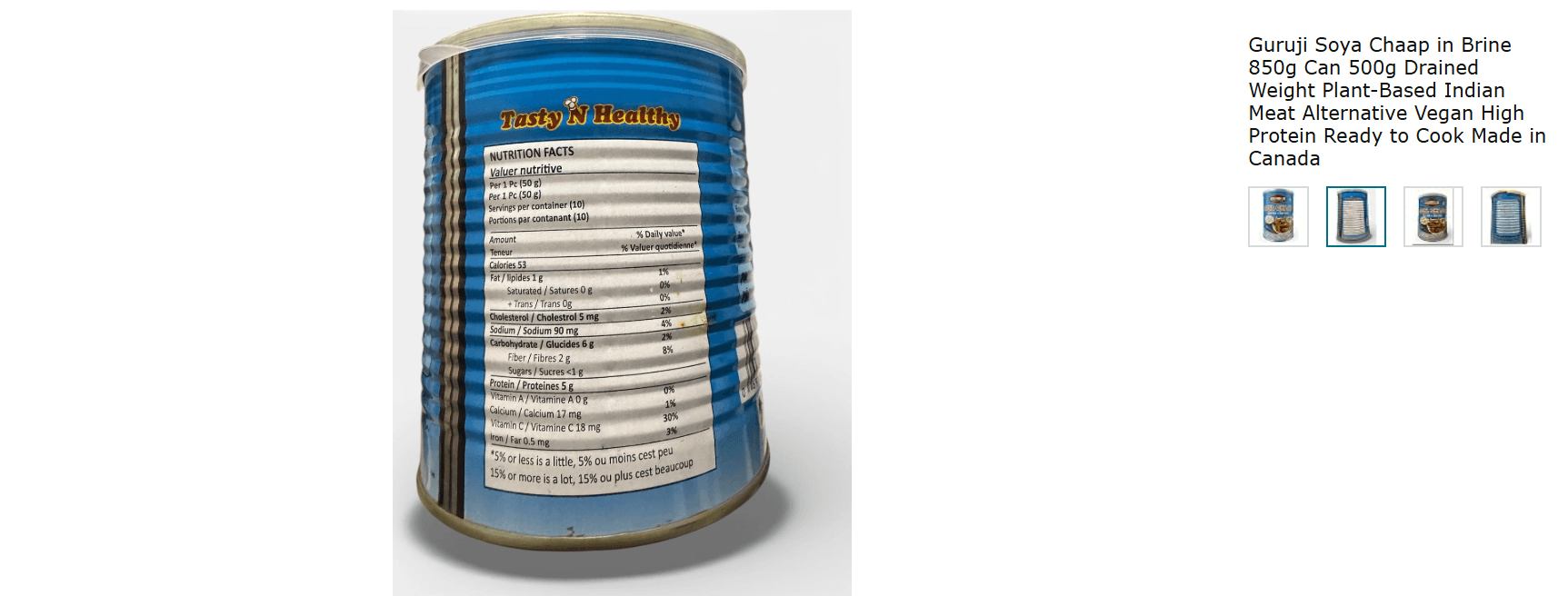
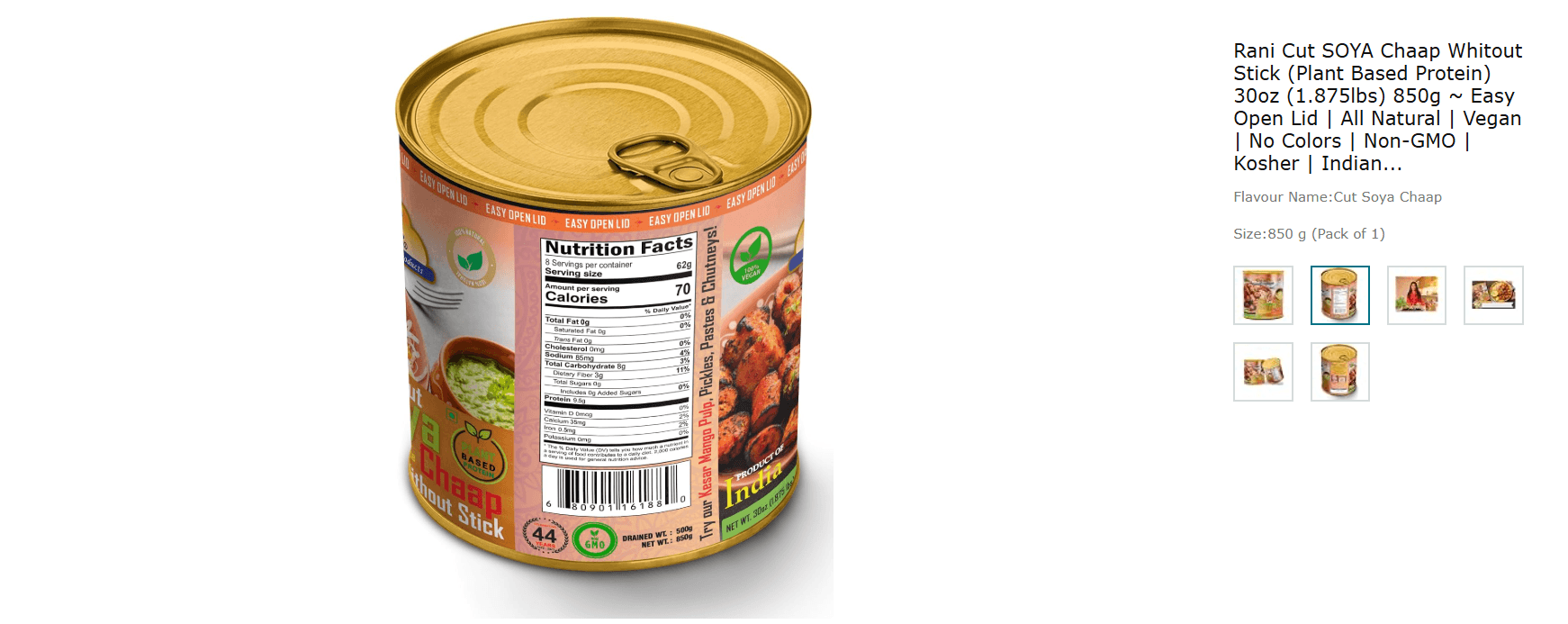
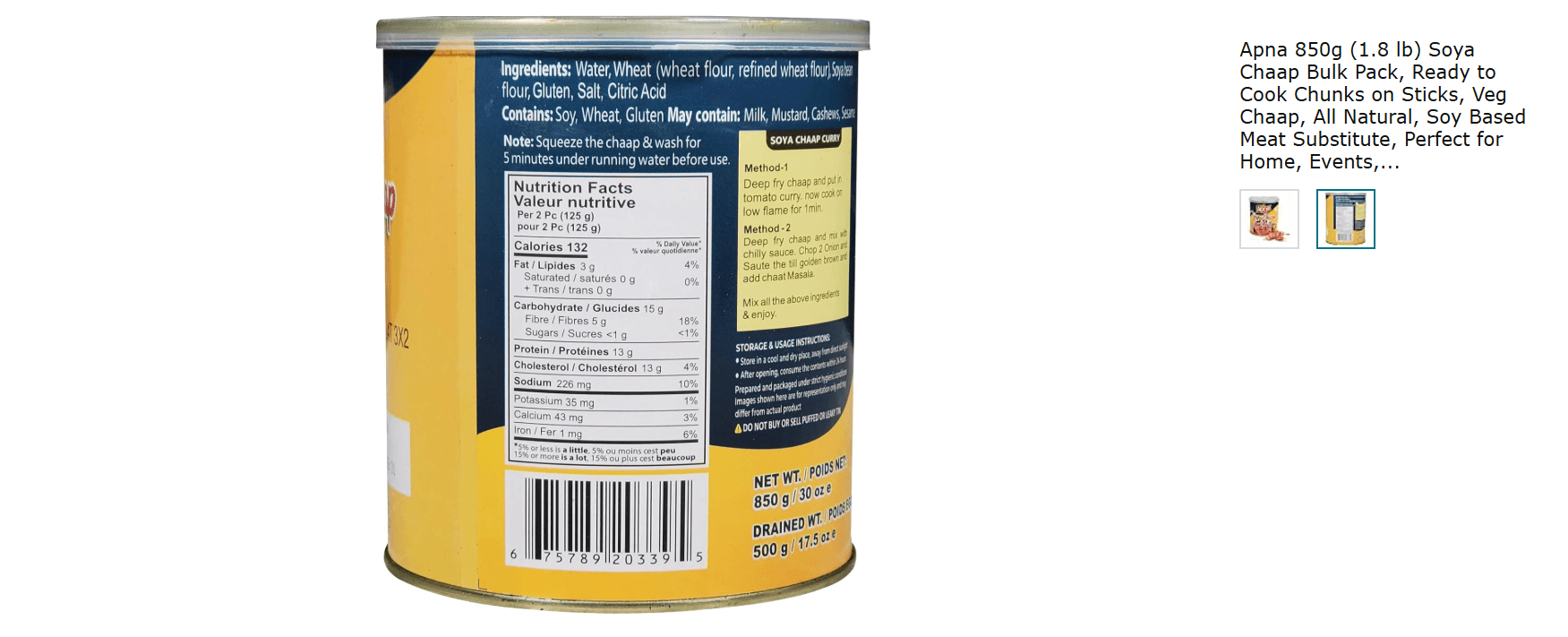
Soya chaap is sold as a high-protein vegetarian hero, and it is routinely quoted at 18 to 20 grams of protein per serving. That number is wrong for the dish most people actually eat. Soya chaap sticks are made from soy flour wrapped around a stick, with a significant amount of refined wheat flour (maida). Across four packaged brand labels and independently published lab testing, traditional chaap runs from about 8 to 16 grams of protein per 100 grams, clustering near 10, at roughly 106 to 110 calories per 100 grams. Nothing in that spread supports a blanket 18 to 20 grams for the chaap most of the market sells. A katori of the gravy dish holds around 75 grams of chaap, which is roughly 7.5 grams of protein, plus a little from cream and cashew in the masala. That is about 9 grams per katori, not 18, and it sits in the middle of that documented cluster rather than standing on its own. The 18 to 20 gram figure appears to be the value for plain soy chunks (soya nuggets), which genuinely are high protein, mistakenly applied to chaap, which is a different product. You can watch that substitution happen in public: HealthifyMe lists soya chaap at 17.7 grams of protein while the recipe printed on the same page calls for soya chunks as the ingredient. The wheat is not hidden either. A Rani-brand chaap sold on Walmart lists whole wheat flour among its ingredients while being marketed as plant-based protein. Practical version: if you are counting on chaap for protein, you are getting about half of what you think.
A chaap manufacturer reached the same conclusion from the opposite direction. Protein Pantry publishes its own lab testing. This is manufacturer data, not neutral third-party testing: they sell no-maida chaap, so they have a commercial interest in the answer, and that is worth stating plainly. Their lab results for typical maida-based chaap come back at 8 to 10 grams of protein per 100 grams, which is what the brand labels and our recipe math produce independently. Their category range is 10 to 13 grams for typical chaap made with maida, and 16 to 19 grams for clean no-maida chaap. That upper band is where the confusion starts, and it deserves precision: those 16 to 19 gram products are reformulated, built on vital wheat gluten, which is naturally 75 to 80 percent protein, not on the traditional soya-and-maida stick. So the widely quoted 18 to 20 gram figure is not invented. It is roughly right for a newer category of clean chaap, and wrong when applied to the traditional chaap that most of the market still sells. Their explanation for why the old recipe persists is economic: soya flour costs about five times what maida costs, so the half-soya, half-maida formulation that took hold in the 1990s became and stayed the default.
The dal makhani spread
Search "dal makhani calories" and you will find everything from 90 to 300 calories for a serving. That looks like sloppy data, and some of it is, but the deeper reason is more interesting: nobody states the recipe. The lentils in dal makhani are a small, fixed cost, roughly 88 calories worth of urad dal and rajma in a katori. Everything above that is butter and cream, and that is where the recipes genuinely diverge. A homestyle version with a light hand on the butter is near 170 calories a katori. A restaurant version is around 220. A dhaba version, where butter is the entire point, crosses 285. All three are "dal makhani." Quoting a single number without saying which one you cooked is the actual error, not the specific figure. This is the core problem with Indian food data: the same dish name covers foods that differ by 60 percent, and a flat number hides that.
The same spread applies to whatever you are eating: see how cooking style changes your own plate.
The 11 dishes I checked: commonly quoted vs the recipe math
| Dish | Commonly quoted | Our figure | Why they differ |
|---|---|---|---|
| Soya chaap | 18 to 20 g protein / katori | ~9 g protein / katori | The high figure is for plain soy chunks. Chaap is mostly maida. |
| Dal makhani | 90 to 300 cal / serving | 220 cal / katori (restaurant) | Nobody states the recipe. Butter and cream are the whole spread. |
| Paneer butter masala | 180 to 350 cal | 360 cal / katori | Fat stacks 4x: paneer, butter, cream, cashew. Most sources undercount. |
| Chole bhature | 450 to 800 cal | 860 cal / plate | The bhature are 70% of the plate. Frying oil is usually ignored. |
| Rajma chawal | 300 to 500 cal | 418 cal / plate | Depends entirely on rice portion and tadka. |
| Masala dosa | 106 to 387 cal | 250 cal / medium dosa | Size and oil. A small home dosa and a ghee paper dosa are different foods. |
| Palak paneer | 180 to 366 cal | 230 cal / katori (home) | Home vs restaurant cream is the split. |
| Aloo paratha | 150 to 400+ cal | 280 cal / medium (ghee) | The cooking fat is the entire variable. |
| Butter chicken | 260 to 490 cal | 320 cal / katori | Chicken is fixed; the makhani gravy moves it. |
| Idli | 50 to 100 cal / piece | ~60 cal / piece (120 / 2) | One of the few that is actually consistent. Steamed, no oil. |
| Poha | 180 to 320 cal | 250 cal / plate | Oil and potato. Plain vs aloo poha differ. |
The site covers more dishes than these eleven. See the full calorie chart for all dishes.
How these numbers were calculated
Composed Indian dishes do not exist in any nutrition database, so each figure is built from a defined standard recipe, summing ingredient-level values from USDA FoodData Central (public domain), and dividing by servings. Soya chaap stick values are anchored to four packaged brand labels, which agree closely. The Indian Food Composition Tables (IFCT 2017, ICMR-NIN) were used as a cross-reference. Every dish page states its exact recipe basis and a confidence label. These are careful arithmetic, not laboratory analysis, and where a number is uncertain, the dish page says so. The headline figure on each page is for one clearly stated preparation; the real spread lives in a variants table on that page, because the spread is recipe difference, not measurement error.
Reuse the data: download all 45 dishes as a CSV. Free to use with credit to Katori.
The rest of the work built on this data, the comparisons, the rankings and the tools, is collected on the guides and tools hub.
Corrections
When a number here changes, we say so on the dish page that carried the old figure and list it below.
- Correction, September 2026: we previously listed one katori of rice as 150 g and 195 calories. Our own katori guide and USDA density data put a lightly packed 150 ml katori at about 120 g, so we corrected rice, jeera rice, and veg pulao to 120 g per katori.
Be one of the first to use Katori.
One photo, and you get the real numbers for your actual plate, recipe and all.
Join the waitlist