Chicken tikka masala calories: cup/katori and 100 g
Also called CTM, tikka masala and chicken tikka curry.
By Shivam Verma Updated 11 sources linked below
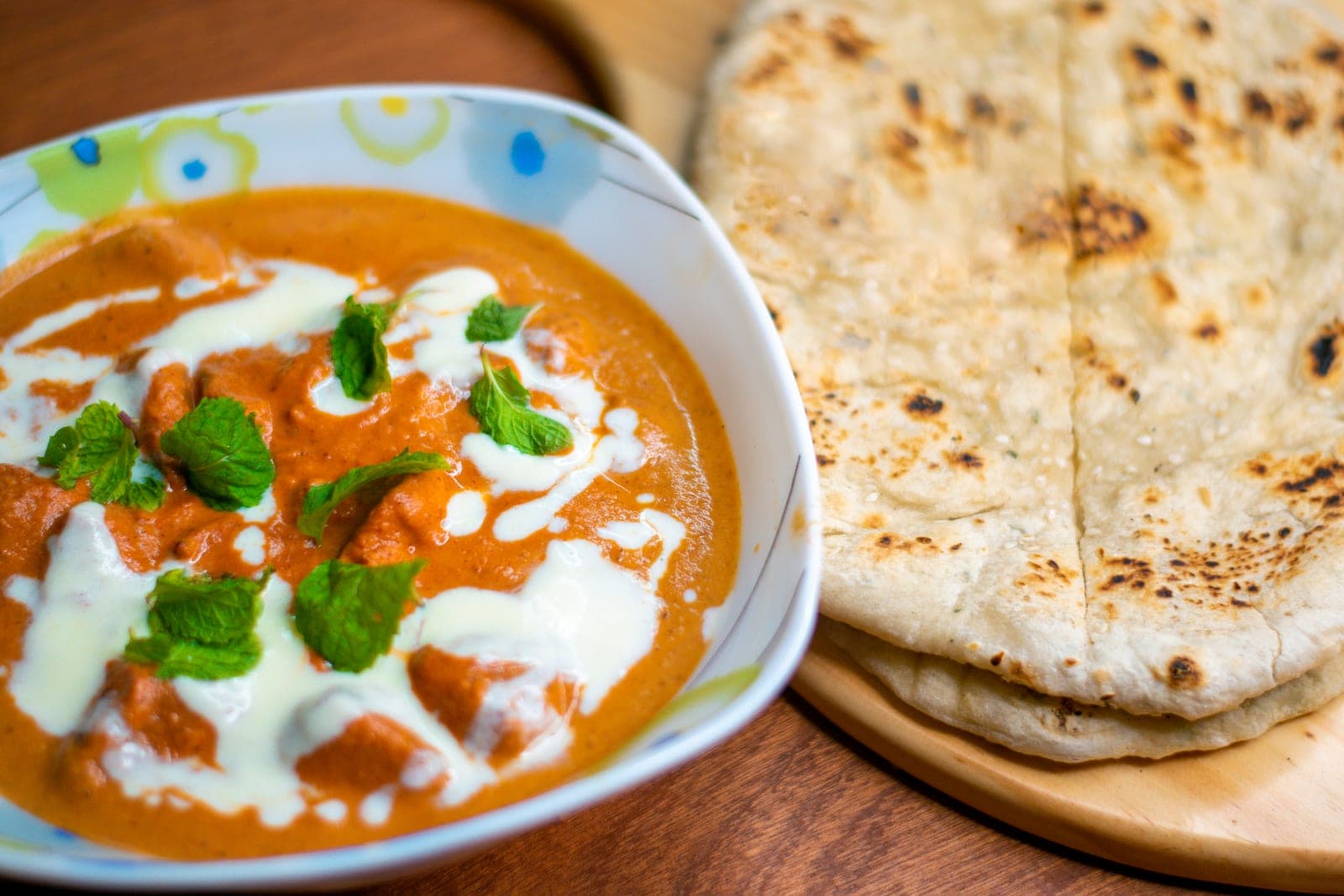
One katori (150 g) of restaurant chicken tikka masala has about 241 calories, 17.3 g of protein and 16.1 g of fat. One cup (240 g) has about 386. Made at home with less cream it is 178 a katori. A UK takeaway portion of 523 g, made the takeaway way, comes to about 1122.
241calories
Protein
17.3 g
Carbs
6.9 g
Fat
16.1 g
1 cup = a 240 ml US cup of the dish as served. UK, Canadian and Australian cups are 250 ml: add about 4%.
Founding 500
Your bowl is not exactly 150 g.
Katori is an iPhone app that counts your actual plate from one photo. Built for Indian food first.
No spam. One email at launch, then only if it matters. Privacy.
First 500 sign-ups get the badge, paid or free. 10% off Pro annual, expires 30 days after launch, replaces the trial.
About chicken tikka masala
Chicken tikka masala is two dishes in one bowl. First the tikka: pieces of chicken breast marinated in curd and spices and grilled or charred. Then the masala: onion cooked down with tomato and spices, finished with cream and a little butter, with the grilled tikka simmered in it. Our restaurant katori holds 70 g of raw breast, 15 g of cream, 6 g of oil and 5 g of butter. The chicken brings 35 percent of the calories and almost all of the 17.3 g of protein; cream, oil and butter together bring 52 percent. A takeaway in the UK or Ireland is a different scale of meal, a big container rather than a katori, and that is where the numbers run away.
Home vs takeout
Home uses 75 g of breast with 5 g of cream and 5 g of oil, and no butter. The restaurant katori has 70 g of breast, 15 g of cream, 6 g of oil and 5 g of butter. The UK takeaway style katori has 65 g of breast, 20 g of cream, 12 g of oil and 8 g of butter.
| Version | 1 katori | 1 cup | Protein, 1 cup |
|---|---|---|---|
| Home, less cream, no butterMore chicken, a third of the cream, a little less oil. | 178 | 284 | 29.2 g |
| RestaurantHeadline | 241 | 386 | 27.6 g |
| UK takeaway styleMore oil, cream and butter than the restaurant katori. | 322 | 515 | 25.8 g |
Tikka masala against butter chicken
They look alike in the bowl and are built differently. Butter chicken is usually thigh, cooked in a makhani gravy of tomato, butter and cream. Tikka masala starts from breast that is grilled first, then simmered in an onion and tomato masala that leans on cream and oil more than on butter.
Our restaurant katori of butter chicken is 307 calories with 16.2 g of protein and 24.1 g of fat. Tikka masala is 241 calories with 17.3 g of protein and 16.1 g of fat, 66 calories lighter, because breast carries 2.6 g of fat per 100 g raw against 4.1 g for thigh, and the masala uses less butter.
Chicken is 70 g of this katori, weighed raw, and brings 35 percent of its calories. Every chicken weight on this page is meat only, with no bone or skin, so a bone-in serving of the same weight holds less meat than these figures.
The UK takeaway portion
A UK takeaway tikka masala is a different scale of meal. The average portion safefood measured is about 3.5 katoris, and made our takeaway way it carries 56.1 g of protein. Our recipe lands 10 percent under the laboratory figure. The two are independent, one measured from real takeaways and one built from a stated recipe, so their closeness is a check on both.
safefood's laboratory analysis of Indian takeaways in Ireland and Northern Ireland measured the average chicken tikka masala portion at 523 g and 1,249 calories, with 90.8 g of fat. Our recipe scaled to the same weight comes to 1,122 calories and 89.0 g of fat.
| Chicken tikka masala, 523 g | Calories | Fat |
|---|---|---|
| Our recipe (uk takeaway style), scaled to the same weight | 1122 | 89.0 g |
| safefood laboratory analysis, mean takeaway portion | 1,249 | 90.8 g |
safefood's figure is an outside measurement of real takeaways, not built from our recipe.
A study that measured US restaurant meals in the lab found they averaged 1,205 calories, and 92 percent of them exceeded typical energy needs for a single eating occasion. Why the restaurant version of a dish runs richer than the home one is set out dish by dish on the homemade vs restaurant page.
A takeaway meal, as safefood measured it
The same survey measured the rest of the order. Its average pilau rice portion was 289 g and 496 calories, and its average plain naan 173 g and 504. A tikka masala with both, all three as measured, comes to 2,249 calories.[10]
Sharing changes that more than any swap does. Half the average takeaway portion, made our takeaway way, is about 561 calories. A home katori with a katori of rice is 334, and a restaurant katori with the same rice 397.
Grilled breast first
The tikka is marinated in 10 g of curd before it goes near the gravy, and grilling it first sears the outside and drives off some of its water. That is why tikka masala tastes smoky in a way butter chicken does not, and why the chicken loses weight before it reaches the katori.
A katori of the masala holds 70 g of raw breast, under half the 150 g on a plate of our chicken tikka. So the plate, at 260 calories, carries 35.3 g of protein against the katori's 17.3 g: the gravy takes the place of chicken.
Breast is the usual cut here, and it keeps the katori lean. Made with the same weight of thigh, our restaurant katori would be 242 calories with 17.1 g of fat.
Chicken loses water as it cooks. USDA's breast records carry 22.5 g of protein per 100 g raw and 31.0 g roasted, which implies that 100 g of raw breast roasts down to about 73 g, a loss of 27 percent. This recipe's water lost line is 18 g against 70 g of raw chicken, 26 percent, which also carries what simmers off the gravy.
Cream, oil and butter
In the restaurant katori the cream brings 15 percent of the calories, the oil 22 percent and the butter 15 percent. The onion, tomato puree, curd and sugar bring 13 percent between them.
Cream moves in steps. Every 5 g of it is about 12 calories, so going from the home katori's cream to the restaurant's adds 25, and from the restaurant's to the UK takeaway style's another 12. The restaurant katori has 1 g of sugar and the takeaway style 2 g, to round off the tomato; the home one has none.
The curd in the tikka marinade is a small line: about 6 calories and 0.3 g of protein in the restaurant katori. In the UK takeaway style katori, everything but the chicken brings 76 percent of the calories, so a takeaway eaten with less of its sauce is lighter by close to that share.
Per 100 calories, the home katori carries 10.3 g of protein, the restaurant one 7.2 g and the UK takeaway style one 5.0 g: the richer the finish, the less protein each calorie brings.
The masala itself is light. Its 20 g of onion and 35 g of tomato puree bring about 21 calories and 5.0 g of carbohydrate, most of the katori's carbs, and the colour and body of the sauce.
Cooked at home with 5 g of cream and no butter, the katori is 178 calories, 63 fewer than the restaurant one, and it holds a little more chicken. The UK takeaway style katori adds 81 calories to the restaurant one, almost all of it oil, cream and butter.
| Plate | Calories | Protein |
|---|---|---|
| 1 katori of chicken tikka masala | 241 | 17.3 g |
| With 2 plain rotis | 445 | 25.2 g |
| With 1 plain naan | 499 | 24.2 g |
| With 1 katori of rice | 397 | 20.5 g |
Roti, naan and rice are each read from their own page.
Is chicken tikka masala healthy?
The saturated fat follows the cream and butter: 7.0 g in a restaurant katori and 10.4 g in a UK takeaway style one. The protein comes almost entirely from the breast: per 100 calories, tikka masala carries 7.2 g of it, against 5.3 g for butter chicken.
One katori of chicken tikka masala carries 17.3 g of protein and 16.1 g of fat, 7.0 g of it saturated: 7.2 g of protein for every 100 calories. The ghee page sets the NHS and American Heart Association limits for saturated fat side by side.
| Dish | Serving | Calories | Protein | Fat | Chicken, raw |
|---|---|---|---|---|---|
| Chicken curry | 1 katori (150 g) | 170 | 14.7 g | 10.3 g | 70 g |
| Butter chicken | 1 katori (150 g) | 307 | 16.2 g | 24.1 g | 70 g |
| Chicken tikka masala | 1 katori (150 g) | 241 | 17.3 g | 16.1 g | 70 g |
| Chicken korma | 1 katori (150 g) | 281 | 15.9 g | 21.4 g | 65 g |
| Chicken tikka | 1 plate (6 pieces, 144 g) | 260 | 35.3 g | 10.9 g | 150 g |
| Tandoori chicken | 1 leg (140 g) | 240 | 31.4 g | 11.4 g | 160 g |
The headline version of each dish, from its stated recipe. Chicken is meat only, weighed raw.
Chicken tikka masala vs related dishes
| Dish | 1 katori | 1 cup | Protein, 1 katori |
|---|---|---|---|
| Chicken tikka masala | 241 | 386 | 17.3 g |
| Butter chicken | 307 | 491 | 16.2 g |
| Chicken korma | 281 | 449 | 15.9 g |
| Chicken curry | 170 | 272 | 14.7 g |
| Paneer butter masala | 368 | 589 | 14.4 g |
How we calculated this
Every number on this page is for 1 katori (150 g), worked out from the recipe below. Cup and 100 g figures are scaled from it.
- Chicken breast, raw, meat only70 g
- Curd, for the tikka marinade10 g
- Onion20 g
- Tomato puree35 g
- Cooking oil6 g
- Cream15 g
- Butter5 g
- Sugar1 g
- Water6 g
- Ginger, garlic and spicestrace
- Water lost from the grilled tikka and the simmering gravy18 g lost
Restaurant style. Chicken is breast meat, weighed raw with no bone or skin, grilled as tikka before it is simmered.
Ingredient values from USDA FoodData Central (SR Legacy). USDA has no survey record for chicken tikka masala; safefood's laboratory analysis of takeaways is set beside the UK row as an outside figure.
Confidence: high
Sources
- USDA FoodData Central 171077: Chicken, broiler or fryers, breast, skinless, boneless, meat only, raw
- USDA FoodData Central 171284: Yogurt, plain, whole milk
- USDA FoodData Central 170000: Onions, raw
- USDA FoodData Central 170460: Tomato products, canned, puree, without salt added
- USDA FoodData Central 171411: Oil, soybean, salad or cooking
- USDA FoodData Central 170858: Cream, fluid, light whipping
- USDA FoodData Central 173410: Butter, salted
- USDA FoodData Central 169655: Sugars, granulated
- USDA FoodData Central 170923: Spices, cumin seed
- safefood. What's in your Indian takeaway? Laboratory analysis of 280 takeaway samples from 36 outlets, September 2015.
- Urban LE et al. Energy contents of frequently ordered restaurant meals and comparison with human energy requirements and U.S. Department of Agriculture database information: a multisite randomized study. J Acad Nutr Diet, 2016.
Common questions
How many calories are in a typical chicken tikka masala?
A restaurant katori of 150 g is about 241. A UK takeaway portion is far bigger: safefood measured 523 g and 1,249 calories on average, and our takeaway style recipe at that weight is 1122.
Is chicken tikka masala OK for weight loss?
A restaurant katori is 241 calories with 17.3 g of protein; made at home it is 178 with 18.3 g. A whole takeaway portion is 1122 by our recipe.
Is chicken tikka masala healthier than butter chicken?
It is lighter by our recipes: 241 calories and 16.1 g of fat a restaurant katori, against 307 calories and 24.1 g for butter chicken. Its protein is close, 17.3 g against 16.2 g.
Is chicken tikka masala lighter than chicken korma?
Yes, by our restaurant katoris: 241 calories for tikka masala against 281 for korma, which carries 21.4 g of fat from its cream, ghee and cashews.
How much protein is in chicken tikka masala?
About 17.3 g in a restaurant katori, from the 70 g of breast, and 18.3 g in a home katori with a little more chicken.
How many calories are in homemade chicken tikka masala?
About 178 a katori, or 284 a cup, with 5 g of cream, 5 g of oil and no butter, and 8.6 g of fat.
How many calories are in chicken tikka masala with rice?
A restaurant katori with a katori of rice, at 156 calories, is 397. A takeaway tikka masala with safefood's average pilau rice and naan, as measured, is 2,249.
Is tikka masala the same as butter chicken?
No. Tikka masala is grilled breast tikka in an onion and tomato masala with cream; butter chicken is usually thigh in a butter, tomato and cream makhani gravy. Our restaurant katoris are 241 and 307 calories.
These figures are estimates from stated recipes, for general information. They are not medical or dietary advice. If you manage a health condition, check with a registered dietitian or your doctor.
Related dishes
Founding 500
Be one of the original 500.
Permanent badge, plus 10% off your first year of Pro.
Snap one photo and get these numbers for your actual plate, not a generic entry. Built for Indian food first.
No spam. One email at launch, then only if it matters. Privacy.
First 500 sign-ups get the badge, paid or free. 10% off Pro annual, expires 30 days after launch, replaces the trial.