Chicken curry calories: cup/katori and 100 g
Also called chicken gravy, home chicken curry and murgh curry.
By Shivam Verma Updated 10 sources linked below
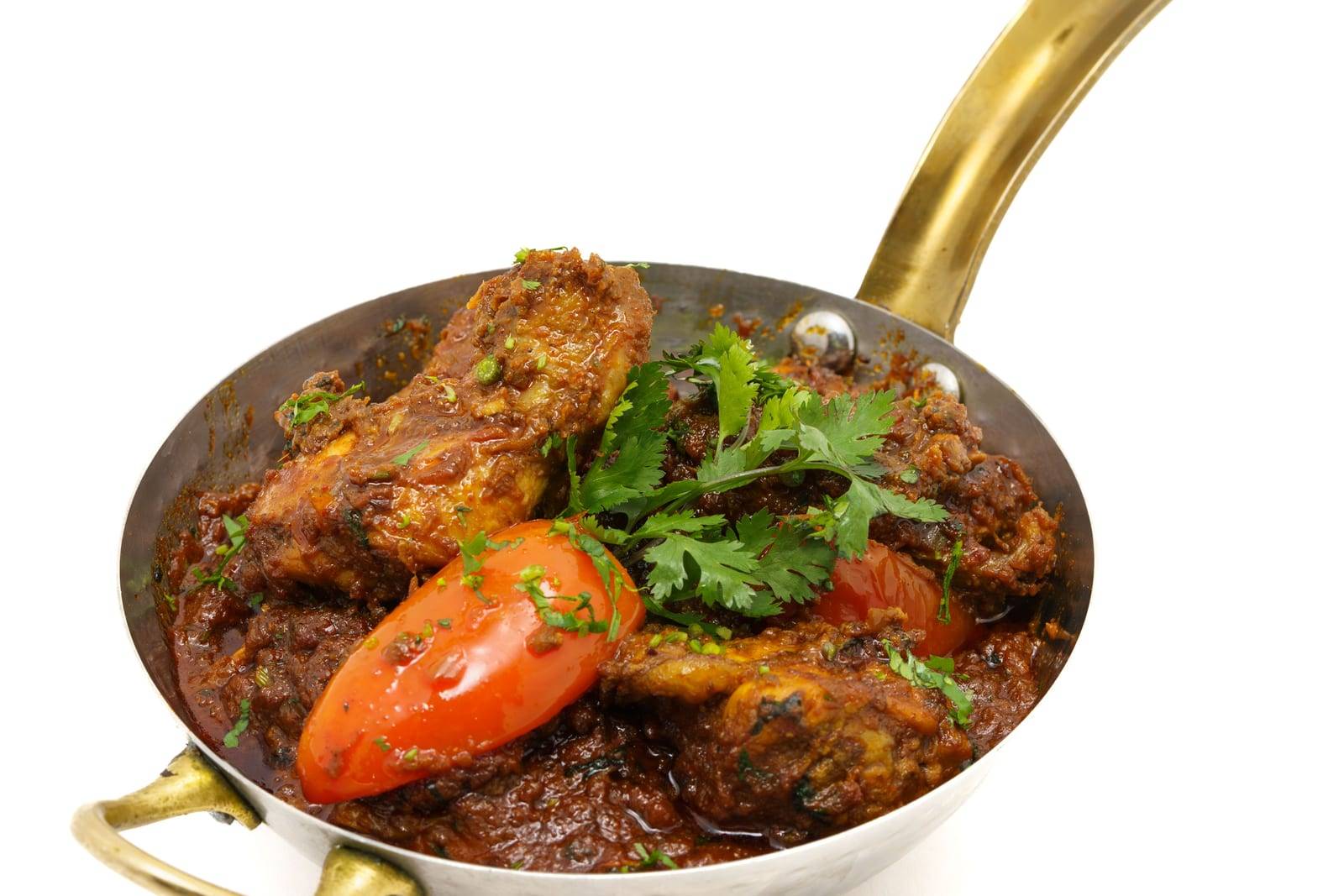
One katori (150 g) of home chicken curry has about 170 calories, 14.7 g of protein and 10.3 g of fat. One cup (240 g) has about 272. A restaurant katori, with more oil and a little cream, is 231, and a dhaba katori finished with butter and cream 270.
170calories
Protein
14.7 g
Carbs
4.4 g
Fat
10.3 g
1 cup = a 240 ml US cup of the dish as served. UK, Canadian and Australian cups are 250 ml: add about 4%.
Founding 500
Your bowl is not exactly 150 g.
Katori is an iPhone app that counts your actual plate from one photo. Built for Indian food first.
No spam. One email at launch, then only if it matters. Privacy.
First 500 sign-ups get the badge, paid or free. 10% off Pro annual, expires 30 days after launch, replaces the trial.
About chicken curry
Chicken curry is the everyday one: chicken cooked in a gravy of browned onion, tomato, ginger, garlic and ground spices, with a little curd stirred in. There is no cream or cashew in a home curry, which is why it sits well under the restaurant gravies. Our home katori holds 70 g of raw thigh meat cooked with 7 g of oil. The chicken brings 50 percent of the calories, the oil 36 percent and the onion, tomato and curd 14 percent.
Home vs takeout
The chicken is the same 70 g in all three katoris; the fat changes. Home uses 7 g of oil. The restaurant katori uses 12 g of oil and 8 g of cream. The dhaba katori uses 10 g of oil, 8 g of butter and 10 g of cream.
| Version | 1 katori | 1 cup | Protein, 1 cup |
|---|---|---|---|
| HomeHeadline | 170 | 272 | 23.6 g |
| Restaurant, more oil and creamMore oil and a little cream, a little less onion and tomato. | 231 | 370 | 23.6 g |
| Dhaba, butter and cream finishOil, butter and cream, no curd. | 270 | 431 | 23.3 g |
The katori of curry you actually get
Our katori is boneless: 70 g of raw meat with the bone and skin removed, which is about 47 g of chicken in every 100 g of finished curry. Home curry is often cooked with bone-in pieces, and then the bones take up room the meat would have filled. The calories from the chicken drop with it, and the gravy, which carries the oil, makes up more of the bowl.
The oil is the part you control. 7 g of it in the home katori is about 62 calories. The restaurant katori uses 12 g, about 106, and adds cream, which together take it 61 calories over the home one. The dhaba katori's oil, butter and cream come to about 170 calories, 100 more than home.
Chicken is 70 g of this katori, weighed raw, and brings 50 percent of its calories. Every chicken weight on this page is meat only, with no bone or skin, so a bone-in serving of the same weight holds less meat than these figures.
Chicken loses water as it cooks. USDA's breast records carry 22.5 g of protein per 100 g raw and 31.0 g roasted, which implies that 100 g of raw breast roasts down to about 73 g, a loss of 27 percent. This recipe's water lost line is 18 g against 70 g of raw chicken, 26 percent, which also carries what simmers off the gravy.
Where the protein is
Of the katori's 14.7 g of protein, 13.8 g comes from the chicken and 0.9 g from the onion, tomato and curd. The gravy fills the bowl; the chicken carries the protein.
Made with breast, the same 70 g of meat gives a katori of 169 calories and 9.2 g of fat, against 170 and 10.3 g with thigh. Thigh is the usual cut for a curry because it stays soft in a long simmer.
In the restaurant katori, the cream is the smaller part of the gap. Its 8 g of cream is about 20 calories, while the extra 5 g of oil is about 44.
Against USDA's survey record
USDA's survey record for chicken curry, the one a food diary drawing on FNDDS may show you, is 107 calories per 100 g, and it weighs a cup at 240 g, the same as ours. It is built with 20 g of chicken in every 100 g, mixed vegetables and a generic curry sauce.[9]
Our home curry is 113 calories per 100 g with about 47 g of chicken in every 100 g. The two are close on calories, and ours carries much more chicken, which is where its protein comes from.
A study that measured US restaurant meals in the lab found they averaged 1,205 calories, and 92 percent of them exceeded typical energy needs for a single eating occasion. Why the restaurant version of a dish runs richer than the home one is set out dish by dish on the homemade vs restaurant page.
With rice or naan
A katori of curry is rarely the whole meal. The table puts a home katori next to a katori of rice, a plain naan or two plain rotis, each read from its own page.
| Plate | Calories | Protein |
|---|---|---|
| 1 katori of chicken curry | 170 | 14.7 g |
| With 2 plain rotis | 374 | 22.7 g |
| With 1 plain naan | 428 | 21.7 g |
| With 1 katori of rice | 326 | 18.0 g |
Roti, naan and rice are each read from their own page.
Is chicken curry healthy?
A home katori is lighter than the restaurant gravies: butter chicken is 307 calories a katori, chicken korma 281 and chicken tikka masala 241. The restaurant curry's saturated fat is 4.4 g against 2.1 g at home, most of it from the cream.
One katori of chicken curry carries 14.7 g of protein and 10.3 g of fat, 2.1 g of it saturated: 8.7 g of protein for every 100 calories. The ghee page sets the NHS and American Heart Association limits for saturated fat side by side.
| Dish | Serving | Calories | Protein | Fat | Chicken, raw |
|---|---|---|---|---|---|
| Chicken curry | 1 katori (150 g) | 170 | 14.7 g | 10.3 g | 70 g |
| Butter chicken | 1 katori (150 g) | 231 | 16.5 g | 15.5 g | 75 g |
| Chicken tikka masala | 1 katori (150 g) | 178 | 18.3 g | 8.6 g | 75 g |
| Chicken korma | 1 katori (150 g) | 211 | 16.3 g | 13.7 g | 70 g |
| Chicken tikka | 1 plate (6 pieces, 141 g) | 233 | 35.3 g | 7.9 g | 150 g |
| Tandoori chicken | 1 leg (138 g) | 222 | 31.4 g | 9.4 g | 160 g |
Each dish as cooked at home, from its stated recipe. Chicken is meat only, weighed raw.
Chicken curry vs related dishes
| Dish | 1 katori | 1 cup | Protein, 1 katori |
|---|---|---|---|
| Chicken curry | 170 | 272 | 14.7 g |
| Butter chicken | 231 | 370 | 16.5 g |
| Chicken korma | 211 | 338 | 16.3 g |
| Chicken tikka masala | 178 | 284 | 18.3 g |
| Dal tadka | 181 | 289 | 8.4 g |
Every row is home cooking, the version every dish has, so the rows compare like with like. Restaurant and dhaba figures are on each dish page and in the calculator.
Related guide: High-Protein Indian Foods, Ranked Per Serving
How we calculated this
Every number on this page is for 1 katori (150 g), worked out from the recipe below. Cup and 100 g figures are scaled from it.
Correction, October 22, 2026: rebuilt from a stated recipe using USDA FoodData Central values, with the chicken weighed raw and meat only. One katori (150 g) of chicken curry was 200 calories; it is now 170.
- Chicken thigh, raw, meat only70 g
- Onion30 g
- Tomato30 g
- Cooking oil7 g
- Curd10 g
- Water21 g
- Ginger, garlic and spicestrace
- Water lost from the chicken and the simmering gravy18 g lost
Home style. Chicken is thigh meat, weighed raw with no bone or skin; the water is the gravy's, and the water lost line is what cooks out of the chicken and the pan.
Ingredient values from USDA FoodData Central (SR Legacy). Cross-checked against USDA's survey record for chicken curry.
Confidence: high
Sources
- USDA FoodData Central 173627: Chicken, broilers or fryers, dark meat, thigh, meat only, raw
- USDA FoodData Central 170000: Onions, raw
- USDA FoodData Central 170457: Tomatoes, red, ripe, raw, year round average
- USDA FoodData Central 171411: Oil, soybean, salad or cooking
- USDA FoodData Central 171284: Yogurt, plain, whole milk
- USDA FoodData Central 170923: Spices, cumin seed
- USDA FoodData Central 170858: Cream, fluid, light whipping
- USDA FoodData Central 173410: Butter, salted
- USDA FoodData Central 2706437: Chicken curry
- Urban LE et al. Energy contents of frequently ordered restaurant meals and comparison with human energy requirements and U.S. Department of Agriculture database information: a multisite randomized study. J Acad Nutr Diet, 2016.
Common questions
How many calories are in 1 cup of chicken curry?
About 272 for a cup of 240 g of home curry, with 23.5 g of protein. A cup of the restaurant curry is 370.
Is chicken curry high in calories?
A home katori is 170 calories, under butter chicken at 307 and chicken korma at 281. Restaurant curry, with more oil and cream, is 231.
Is chicken curry healthy for weight loss?
A home katori is 170 calories with 14.7 g of protein and 10.3 g of fat. The oil, 7 g of it, is about 62 of those calories.
How much protein is in chicken curry?
About 14.7 g in a katori, from the 70 g of thigh meat. A plate of chicken tikka, with more chicken and no gravy, has 35.3 g.
How many calories are in restaurant chicken curry?
About 231 a katori in our restaurant recipe, with 12 g of oil and 8 g of cream, and 17.2 g of fat.
Does bone-in chicken curry have fewer calories?
For a katori weighed with the bones in, yes: the bones count toward the weight and carry no calories you eat, so it holds less chicken than our boneless 70 g.
How many calories are in chicken curry with roti?
A home katori with two plain rotis is about 374 calories, with 22.7 g of protein.
How many calories are in dhaba chicken curry?
About 270 a katori in our dhaba recipe, finished with 8 g of butter and 10 g of cream, with 21.9 g of fat.
These figures are estimates from stated recipes, for general information. They are not medical or dietary advice. If you manage a health condition, check with a registered dietitian or your doctor.
Related dishes
Founding 500
Be one of the original 500.
Permanent badge, plus 10% off your first year of Pro.
Snap one photo and get these numbers for your actual plate, not a generic entry. Built for Indian food first.
No spam. One email at launch, then only if it matters. Privacy.
First 500 sign-ups get the badge, paid or free. 10% off Pro annual, expires 30 days after launch, replaces the trial.