Ghee calories: tsp/tbsp and 100 g
By Shivam Verma Updated 8 sources linked below
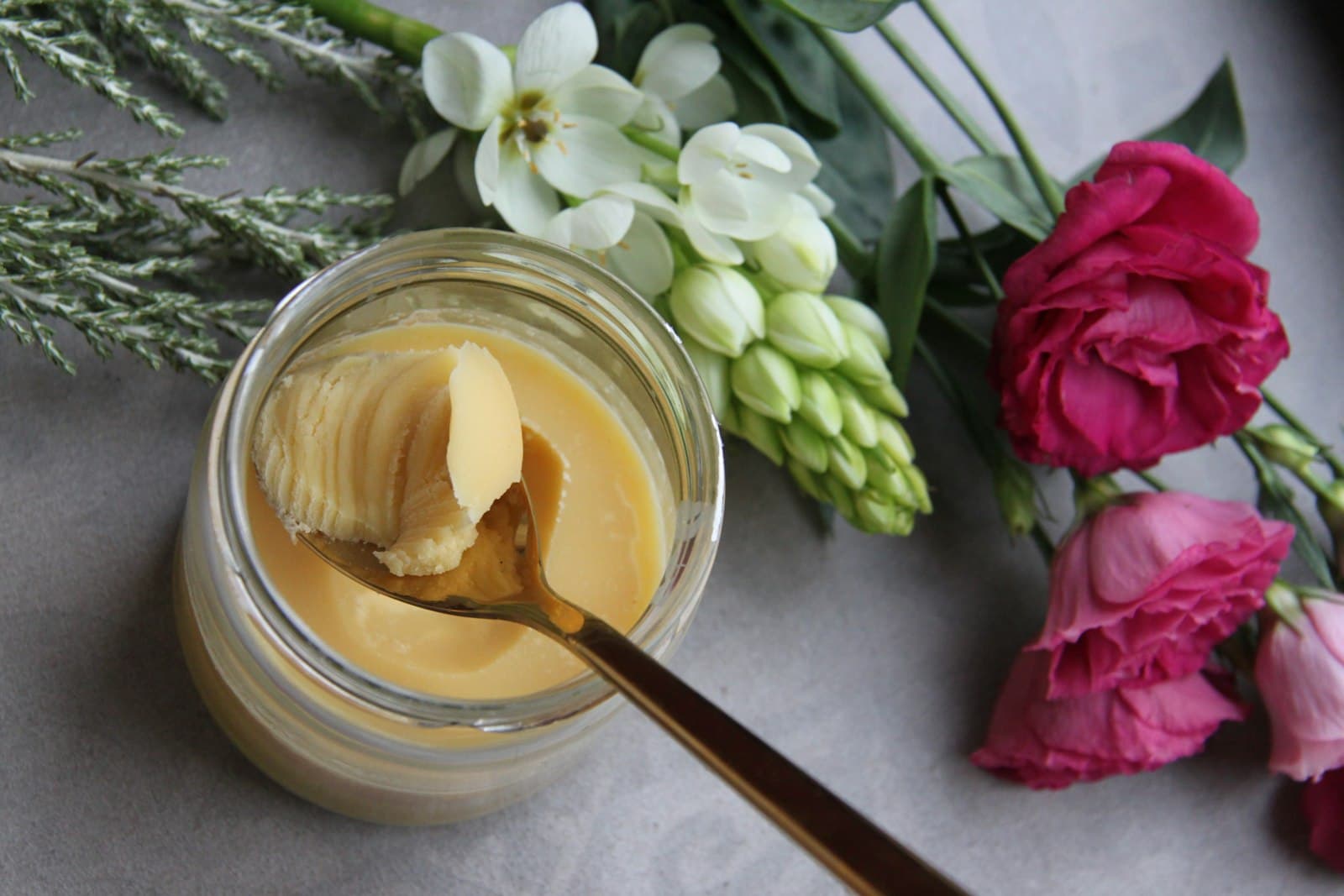
One tablespoon of ghee (12.8 g) has about 112 calories and 12.7 g of fat, 7.9 g of it saturated. One teaspoon (4.3 g) has about 38 calories, and 100 g has 876. USDA files ghee as butter oil, anhydrous: almost pure milk fat, with the water cooked off.
112calories
Protein
0.0 g
Carbs
0.0 g
Fat
12.7 g
Founding 500
Your spoon of ghee is not exactly 12.8 g.
Katori is an iPhone app that counts your actual plate from one photo. Built for Indian food first.
No spam. One email at launch, then only if it matters. Privacy.
First 500 sign-ups get the badge, paid or free. 10% off Pro annual, expires 30 days after launch, replaces the trial.
About ghee
Also called desi ghee and clarified butter.
Ghee is butter cooked slowly until its water has boiled away and its milk solids have browned and been strained off, which leaves clarified butter fat. Desi ghee is the same thing, made at home or by dairies from the butter of cow or buffalo milk. USDA files it as "butter oil, anhydrous", anhydrous meaning without water, and that is the record every number on this page uses: per 100 g, 876 calories and 99.5 g of fat, 61.9 g of it saturated, with almost no protein or carbohydrate and 0.2 g of water. A tablespoon in USDA's portion data weighs 12.8 g, and a teaspoon, a third of that, 4.3 g. In Indian cooking ghee is the tadka fat for dal, the frying fat for many sweets and the spoonful on rice or roti, which is why its numbers turn up on so many pages here. Ghee is sold as cow ghee or buffalo ghee; USDA's record does not split them, so the numbers here are the same for both.
Ghee, butter and oils, per tablespoon
Spoon for spoon, ghee is close to the oils on calories and far from most of them on saturated fat. A tablespoon of ghee is 112 calories with 7.9 g of saturated fat. Canola oil is 124 calories with 1 g, olive oil 119 with 1.9 g, and soybean oil 120 with 2.1 g. Coconut oil carries more saturated fat than ghee: 11.2 g a tablespoon.
Butter is the one that surprises. A tablespoon of salted butter is 102 calories, fewer than ghee's 112, because butter is part water: 16.2 g in every 100 g. Ghee is the same milk fat with that water cooked off, so gram for gram it is denser, 876 calories per 100 g against 717 for butter. A tablespoon of butter is also the heavier spoon, 14.2 g against 12.8 g.
| Fat | 1 tbsp | Calories | Fat | Saturated fat |
|---|---|---|---|---|
| Ghee | 12.8 g | 112 | 12.7 g | 7.9 g |
| Butter, salted | 14.2 g | 102 | 11.5 g | 7.3 g |
| Canola oil | 14 g | 124 | 14.0 g | 1.0 g |
| Olive oil | 13.5 g | 119 | 13.5 g | 1.9 g |
| Soybean oil | 13.6 g | 120 | 13.6 g | 2.1 g |
| Coconut oil | 13.6 g | 121 | 13.5 g | 11.2 g |
Each tablespoon is the weight in that record's own USDA portion data.
How much ghee is in each dish
Every recipe on this site lists its ghee in grams, so we can show what the ghee alone adds. The table below is built from every dish we publish whose headline recipe uses ghee: the grams in one serving, and the calories that ghee supplies.
One teaspoon of ghee, 4.3 g, is 38 calories, so each teaspoon a cook adds to a tadka moves the katori by about that much. The dal under it does not change.
The same teaspoon at the table counts too. On a katori of rice, at 156 calories, it makes 194; on a roti, at 110, it makes 148. A spoon that is a little heaped, or a second one, is easy to miss and easy to count.
| Dish | Serving | Ghee | Calories from ghee |
|---|---|---|---|
| Gajar halwa | 1 katori (150 g) | 9.2 g | 81 |
| Ladoo | 1 besan ladoo (30 g) | 6.5 g | 57 |
| Dal tadka | 1 katori (150 g) | 5.0 g | 44 |
| Chana dal | 1 katori (150 g) | 4.0 g | 35 |
| Masoor dal | 1 katori (150 g) | 4.0 g | 35 |
| Moong dal | 1 katori (150 g) | 3.0 g | 26 |
| Toor dal | 1 katori (150 g) | 3.0 g | 26 |
| Barfi | 1 milk barfi (30 g) | 2.5 g | 22 |
| Gulab jamun | 1 medium piece (33 g) | 0.6 g | 5 |
| Kaju katli | 1 piece (10 g) | 0.2 g | 2 |
From each dish's headline recipe, scaled to one serving. Dishes cooked in oil or butter are not listed.
Is ghee healthy?
Ghee is almost all fat, and 62 percent of that fat is saturated: 7.9 g in a tablespoon and 2.7 g in a teaspoon. Per 100 g it also carries 28.7 g of monounsaturated and 3.7 g of polyunsaturated fat.[1]
Health bodies set saturated fat limits either in grams or as a share of calories. The NHS says men should not eat more than 30 g of saturated fat a day and women no more than 20 g, so a tablespoon of ghee is 26 percent of the men's figure and 40 percent of the women's.[7]
The American Heart Association recommends a dietary pattern with 5 to 6 percent of calories from saturated fat, about 11.1 to 13.3 g on a 2,000 calorie day.[8]
Those are descriptions, not a verdict. A teaspoon in a dal tadka and a tablespoon on every roti are very different amounts. Both bodies advise replacing some saturated fat with unsaturated fat, and swapping ghee for a vegetable oil barely changes the calories: 112 for ghee against 119 to 124 for the oils above.
If you manage your cholesterol or your heart health, ask your doctor or a registered dietitian how much ghee suits you.
| Guideline | What it says | One tablespoon of ghee |
|---|---|---|
| NHS (UK) | Men should not eat more than 30 g of saturated fat a day, and women not more than 20 g. | 7.9 g is 26% of the men's 30 g and 40% of the women's 20 g |
| American Heart Association | Aim for a dietary pattern with 5 to 6 percent of calories from saturated fat. | 7.9 g against about 11.1 to 13.3 g on a 2,000 calorie day |
Common questions
How many calories are in 1 tsp of ghee?
About 38 calories in a level teaspoon of 4.3 g, with 4.3 g of fat, 2.7 g of it saturated. We take a teaspoon as a third of USDA's 12.8 g tablespoon.
How many calories are in 1 tbsp of ghee?
About 112 calories in a tablespoon of 12.8 g, USDA's own portion weight, with 12.7 g of fat and 7.9 g of saturated fat.
Is ghee healthier than butter?
Here are the numbers. Per tablespoon, ghee has more calories and fat than butter: 112 calories and 12.7 g of fat against 102 and 11.5 g, because butter holds water, 16.2 g in every 100 g, and ghee has had it cooked off. Saturated fat per tablespoon: 7.9 g for ghee, 7.3 g for butter.
Is ghee better than oil?
On saturated fat, most oils are lower: per tablespoon, ghee has 7.9 g, canola oil 1 g, olive oil 1.9 g and soybean oil 2.1 g. Coconut oil is higher, at 11.2 g. On calories they are close: 112 for ghee against 119 to 124 for the oils.
Is ghee a good or bad fat?
Here is its fat, so you can judge. Per 100 g, ghee has 99.5 g of fat: 61.9 g saturated, 28.7 g monounsaturated and 3.7 g polyunsaturated. A tablespoon is 26 percent of the NHS daily saturated fat figure for men and 40 percent of the figure for women.
How much ghee is in a katori of dal?
In our recipes, a home katori of moong dal carries 3 g of ghee, masoor dal 4 g and dal tadka 5 g. Restaurant tadkas use more; the table above has every dish we publish that uses ghee.
Does ghee have lactose?
USDA lists 0 g of carbohydrate per 100 g of ghee, which is where milk sugar would be counted, and 0.3 g of protein: the water and the milk solids are cooked off and strained. If you are avoiding lactose for a medical reason, ask your doctor or a registered dietitian whether ghee suits you.
How many calories are in 100 g of ghee?
876 calories, with 99.5 g of fat and 61.9 g of saturated fat. That is about 112 for every tablespoon of 12.8 g.
How we calculated this
Every number on this page is for 1 tbsp (12.8 g), from the USDA record below.
- Ghee (butter oil, anhydrous)12.8 g
One level tablespoon, 12.8 g, USDA's own portion weight for this record. A teaspoon is a third of it.
Values from USDA FoodData Central (SR Legacy), including saturated fat.
Confidence: high
Sources
- USDA FoodData Central 173412: Butter oil, anhydrous
- USDA FoodData Central 173410: Butter, salted
- USDA FoodData Central 172336: Oil, canola
- USDA FoodData Central 171413: Oil, olive, salad or cooking
- USDA FoodData Central 171411: Oil, soybean, salad or cooking
- USDA FoodData Central 171412: Oil, coconut
- NHS. Fat: the facts.
- American Heart Association. Saturated fat.
These figures are estimates from stated recipes, for general information. They are not medical or dietary advice. If you manage a health condition, check with a registered dietitian or your doctor.
Related dishes
Founding 500
Be one of the original 500.
Permanent badge, plus 10% off your first year of Pro.
Snap one photo and get these numbers for your actual plate, not a generic entry. Built for Indian food first.
No spam. One email at launch, then only if it matters. Privacy.
First 500 sign-ups get the badge, paid or free. 10% off Pro annual, expires 30 days after launch, replaces the trial.