Naan vs Roti: The Calorie Gap Is Bigger Than You Think
By Shivam Verma, FounderPublished Last updated
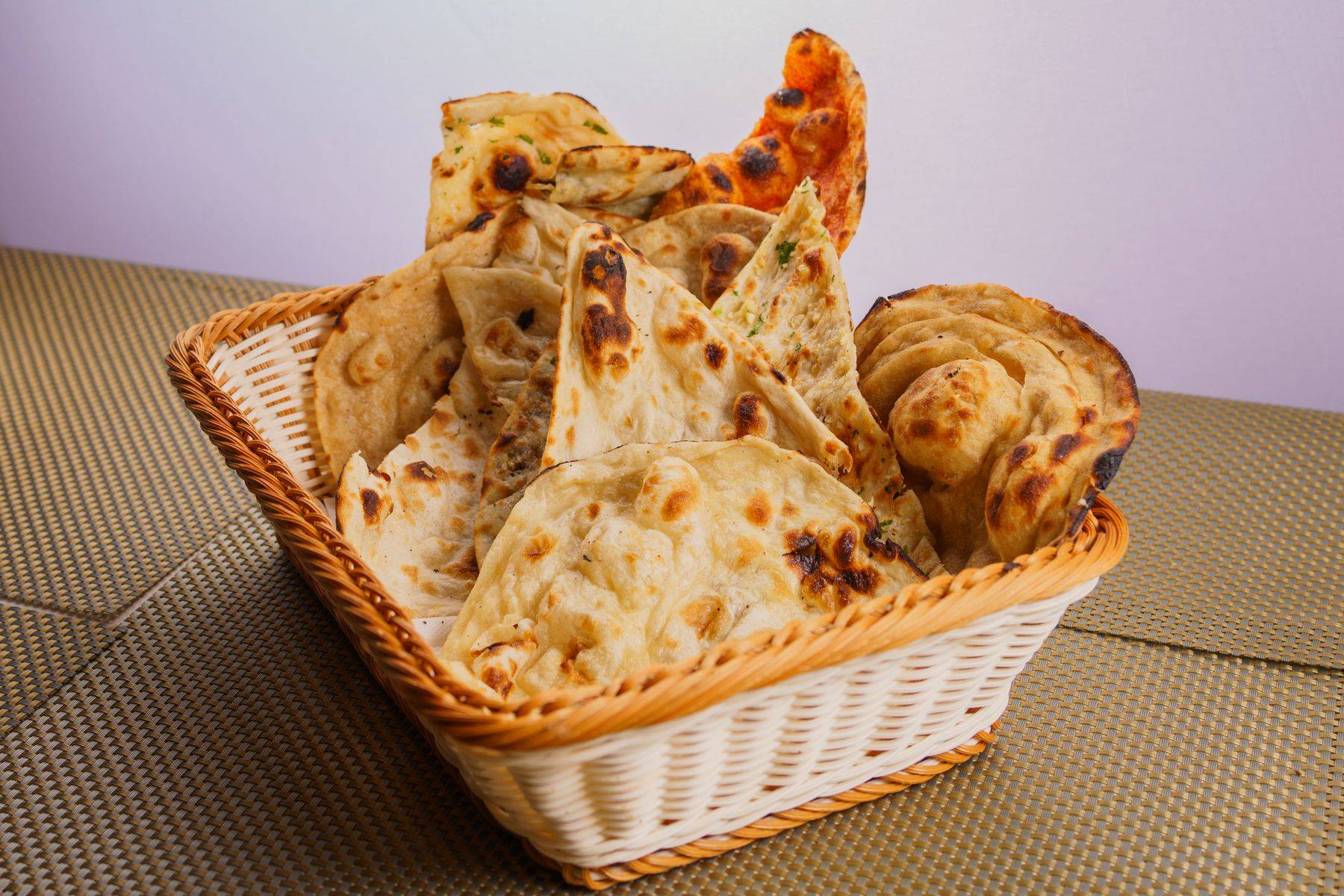
A plain home naan, 90 g, is about 258 calories; a plain roti, 40 g, is 102. One naan costs about 2.5 rotis, because it is bigger and made with refined flour, curd and milk. A takeaway-size naan is 495. For everyday meals, roti gives more fibre for fewer calories.
People treat naan and roti as interchangeable breads, and they are not. A plain naan made at home is about 258 calories; a plain roti is about 102. The gap comes from two things, size and flour: roti is a small whole wheat flatbread with no fat in the dough, and naan is a bigger, leavened bread of refined flour enriched with curd and milk. This page sets them side by side, with the takeaway naan, the brushed and stuffed naans and what studies of grains found, so you can pick the bread for the meal in front of you.
Founding 500
Naan or roti, snap your plate and Katori counts the bread you ate.
Katori is an iPhone app that counts your actual plate from one photo. Built for Indian food first.
No spam. One email at launch, then only if it matters. Privacy.
First 500 sign-ups get the badge, paid or free. 10% off Pro annual, expires 30 days after launch, replaces the trial.
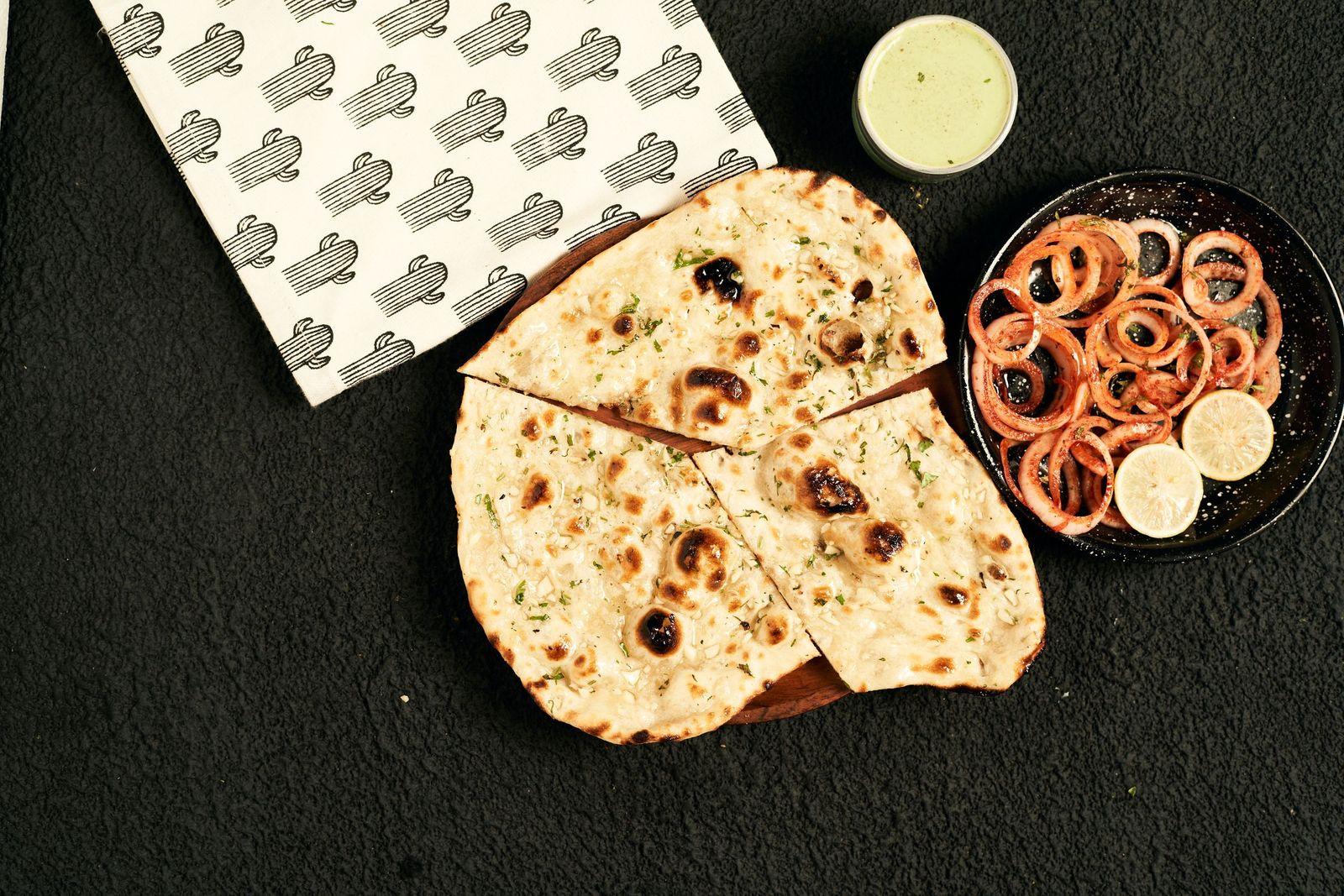
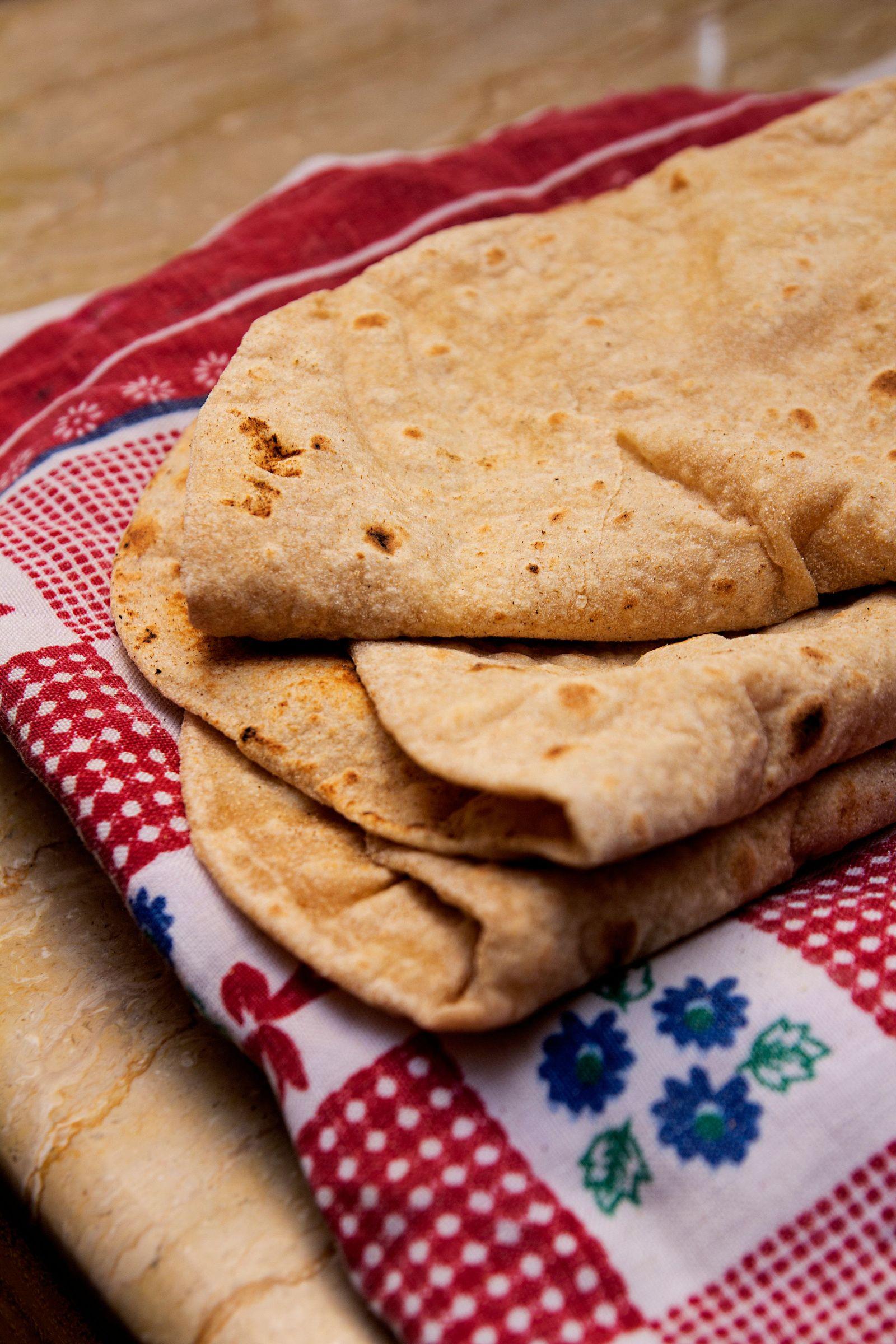
Plain naan vs roti
| Bread | Calories | Protein (g) | Carbs (g) | Fibre (g) | Flour |
|---|---|---|---|---|---|
| Plain naan1 naan (90 g) | 258 | 7.0 | 49.0 | 1.6 | Refined (maida) |
| Plain roti1 medium roti (40 g) | 102 | 4.0 | 21.6 | 3.2 | Whole wheat |
A naan is also a bigger piece of bread: 90 g against 40 g. Weight explains much of the gap, and the flour explains the rest.
Why naan is more than double
Size is the first half. A naan weighs more than twice as much as a roti, so even made from the same dough it would carry about twice the calories. Gram for gram the two breads are closer than their reputations: 286 calories per 100 g of naan against 255 for roti.
The flour is the second half. Roti is whole wheat flour and water, with the bran kept in, so a 40 g roti carries 3.2 g of fibre. Naan is white flour with curd, milk and a little oil and sugar, and its 90 g carries 1.6 g. Per piece, which is how bread is eaten, one naan costs about the same as 2.5 rotis.
The naan family, compared
Plain naan is the floor, not the ceiling. What the kitchen adds on top moves the number a long way.
| Bread | Calories | Protein (g) | Fat (g) | Rotis it equals |
|---|---|---|---|---|
| Plain naan1 naan (90 g) | 258 | 7.0 | 3.2 | 2.5 |
| Butter naan1 butter naan (96 g) | 301 | 7.0 | 8.1 | 2.9 |
| Garlic naan1 garlic naan (100 g) | 307 | 7.3 | 8.1 | 3 |
| Cheese naan1 cheese naan (120 g) | 347 | 13.6 | 9.9 | 3.4 |
| Tandoori roti, restaurantRestaurant size, brushed with butter | 189 | 6.0 | 5.2 | 1.9 |
The last column is each bread's calories divided by a 102 calorie plain roti, from the unrounded totals, to one decimal.
The takeaway naan
A takeaway naan is not our naan. safefood's laboratory analysis of Indian takeaways found the average plain naan weighed 173 g and carried 504 calories. Our recipe at that weight gives 495, close agreement, and about as much as 4.9 plain rotis. Two of them, before any curry, are 991.
What studies of grains found
What studies of grains and bread found
These findings are about grains and fibre in general. A plain roti here has 3.2 g of fibre and a plain naan 1.6 g.
- Fibre and whole grains: a series of systematic reviews and meta-analyses found the greatest risk reductions at 25 to 29 g of dietary fibre a day, with similar findings for whole grains, and its authors expect replacing refined grains with whole grains to benefit health.[5]
- Bread or rice with a meal: in a Delhi study of a full dal and vegetable meal, the version with two rotis and the version with rice had almost the same glycemic index, 85.5 and 83.6.[6]
- Whole grain is not the same as low GI: a study of 12 traditional Indian foods found that being made from whole grain does not, on its own, give a food a lower glycemic index.[7]
If you manage your weight or your blood sugar for a medical reason, ask your doctor or a registered dietitian how bread fits your plan.
Naan or roti with butter chicken
A katori of restaurant butter chicken is 307 calories and 24.1 g of fat before any bread arrives. With two plain rotis the plate comes to 511; with one plain naan, 565; with a butter naan, 608. Two takeaway-size naans under the same katori make 1298.
The bread changes more than the calories. Two rotis bring 6.4 g of fibre and 7.9 g of protein to the plate; one plain naan brings 1.6 g of fibre and 7.0 g of protein. A butter naan costs 97 calories more than two rotis, which is the price of the softer bread. Cooked at home the butter chicken itself is 231 a katori, and two rotis with it make 435.
Naan or tandoori roti
On a restaurant menu the real choice is often naan or tandoori roti. Our restaurant tandoori roti is a bigger whole wheat roti brushed with butter: 65 g, 189 calories, 5.2 g of fat and 4.8 g of fibre. A plain naan is 258 calories with 3.2 g of fat and 1.6 g of fibre. The butter brush closes part of the calorie gap; the whole wheat flour is why the tandoori roti still carries the fibre.
What is in each dough
A home naan starts from 61 g of maida, about twice the 30 g of whole wheat flour in a roti, with 10 g of curd, 10 g of milk, 2 g of oil and a little sugar. Of its calories, the flour brings 86 percent, the curd and milk 5 percent and the oil and sugar 9 percent. A roti is flour and water and nothing else, so every one of its calories is the flour's.
Home naan, takeaway naan
Our home naan weighs 90 g. The takeaway naan the lab weighed was 173 g, about 1.9 times the size, and the same dough at that weight is 495 calories. So most of the gap between a home naan and a takeaway one is size, not recipe: per 100 g it is the same bread, which is why a takeaway naan is worth tearing in half before the curry arrives. A fried poppadom, at 76 calories, is a far smaller thing to break first.
Roti, chapati or phulka
Roti, chapati and phulka name the same whole wheat flatbread; a phulka is a roti puffed over an open flame. All three carry the roti's numbers on this site, 102 calories for a 40 g piece before any ghee, and the same comparison with naan holds for each.
Gram for gram, and per calorie
Weighed out, naan is 286 calories per 100 g and roti 255, closer than the per-piece figures suggest. Per 100 calories a roti carries 3.9 g of protein and a plain naan 2.7 g, so roti is the better protein deal per calorie as well as the better fibre one. The safefood takeaway naan held 9.5 g of fat in its 173 g; our takeaway-size recipe holds 6.2 g, and the lab found 2 g of salt in theirs, which our numbers do not count.
The verdict
Roti is the everyday bread: whole wheat, more fibre, and 102 calories a piece against 258 for a plain naan, with nothing added in the kitchen.
Naan is the occasion bread, and worth it as one. Bread is the invisible part of an order: two home naans are 515 calories and two takeaway naans 991, before a spoon of curry.
If you want one rule: order the naan you actually want, order one, and let the rotis do the rest of the work.
Bread is rarely the whole order. The Indian food calorie calculator totals the naan, the curry and the rice together, so you can see what the bread actually costs you in context.
Sources
- USDA FoodData Central
- IFCT 2017, Indian Food Composition Tables. ICMR-National Institute of Nutrition.
- USDA FoodData Central. SR Legacy 171845: Bread, naan, plain, commercially prepared, refrigerated
- USDA FoodData Central. SR Legacy 171844: Bread, chapati or roti, plain, commercially prepared
- Reynolds A, Mann J, Cummings J, Winter N, Mete E, Te Morenga L. Carbohydrate quality and human health: a series of systematic reviews and meta-analyses. Lancet, 2019.
- Nayar S, Madhu SV. Glycemic index of wheat and rice are similar when consumed as part of a North Indian mixed meal. Indian J Endocrinol Metab, 2020.
- Shobana S, Geetha G, Bai MR, et al. Carbohydrate profiling and glycaemic indices of selected traditional Indian foods. Indian J Med Res, 2022.
- safefood. What's in your Indian takeaway? Laboratory analysis of 280 takeaway samples from 36 outlets, September 2015.
Common questions
Which is better, naan or roti?
For everyday eating, roti: 102 calories and 3.2 g of fibre against 258 calories and 1.6 g for a plain naan. Naan is the richer occasion bread.
Naan or roti with butter chicken?
With a katori of restaurant butter chicken at 307 calories, two plain rotis make a plate of 511 and one plain naan 565. A butter naan instead adds 43 more.
Chapati or naan?
Chapati is the same bread as roti, so the numbers are the same: 102 calories for a plain one against 258 for a plain naan.
Naan or tandoori roti?
A restaurant tandoori roti, bigger than a home roti and brushed with butter, is 189 calories against 258 for a plain naan and 301 for a home butter naan.
How many rotis equal one naan in calories?
About 2.5 plain rotis equal one plain home naan, 2.9 equal a butter naan, and 4.9 equal a takeaway-size naan.
Is whole wheat naan healthier than plain naan?
By the numbers it carries more fibre and protein for fewer calories: 6.5 g of fibre, 8.7 g of protein and 243 calories, against 1.6 g, 7.0 g and 258 for plain naan.
Why is naan so high in calories?
Mostly size: a home naan holds 61 g of flour against 30 g in a roti, and the curd, milk and oil in the dough add 14 percent of its calories on top.
How many calories in a takeaway naan?
safefood's laboratory analysis found an average plain takeaway naan of 173 g at 504 calories. Our recipe at that weight gives 495.
Every dish in this comparison
Related guides
- Roti vs Rice: Which Is Better for Weight Loss?
A katori of rice is about 156 calories and two plain rotis about 204, so rice is lighter. Roti still wins on fibre. The honest comparison, with numbers.
- Homemade vs Restaurant Indian Food: Calorie Gap
Across 39 Indian dishes, restaurant versions run 4 to 45 percent higher in calories than home cooking, median 21. Most of the gap is fat.
- Indian Food for Weight Loss: Eat This, Skip That
You do not have to give up Indian food to lose weight. Here are the lighter dishes, the calorie traps, and the simple swaps, with the real numbers for each.
See all of them on the guides and tools hub.
These figures are estimates from stated recipes, for general information. They are not medical or dietary advice. If you manage a health condition, check with a registered dietitian or your doctor.
Founding 500
Be one of the original 500.
Permanent badge, plus 10% off your first year of Pro.
Katori works this out for your actual plate, preparation and portion included, instead of handing you one number for the dish name.
No spam. One email at launch, then only if it matters. Privacy.
First 500 sign-ups get the badge, paid or free. 10% off Pro annual, expires 30 days after launch, replaces the trial.