Why I built Katori
I moved to Canada as an international student, far from home and cooking for myself for the first time. I was underweight and wanted to build muscle, so I did what everyone does: I learned about protein, macros, and training, and I started tracking everything I ate.
That is where I hit a wall.
Every calorie app I tried was built for a Western plate: grilled chicken, oatmeal, a measured cup of rice. My plate looked nothing like that. It had dal, sabzi, two rotis, and a katori of whatever I had cooked that day. The apps had no idea what to do with it. What counts as one serving of rajma? How much protein is actually in soya chaap? Is this dal a light home version or a restaurant one loaded with butter? I was guessing every single day, and guessing meant my numbers were fiction.
Eventually I realized the problem was not me. No one had built nutrition tracking for the food that a billion people actually eat. Indian food is not one fixed number. The same dish changes with who cooks it, how they cook it, and the size of the katori it is served in.
So I built Katori: a tracker that starts from Indian food instead of forcing it into a Western database. It knows a katori is not a cup, that paneer is not tofu, and that home, restaurant, and dhaba cooking are three genuinely different things. Accurate, precise, and built for the way we actually eat.
I built the tool I wished I had. I hope it is the one you needed too.
 Shivam VermaFounder of Katori
What makes Katori different
You can try the thinking behind it before the app ships: the free Indian food calorie calculator does the same arithmetic by hand, preparation and portion included.
Katori is built for Indian dishes from the ground up rather than fitted onto a Western database. A thali is not a plate of chicken and rice with the labels swapped, so the dish list, the portions, and the macros all start from desi food instead of ending there.
It also accounts for how a dish is cooked. Home, restaurant, and dhaba versions of the same curry can differ by half, because the butter, the cream, and the ghee are where the calories actually sit. Most apps publish one flat number and hide that spread. We checked the numbers and published the proof.
And it understands real Indian portions. A katori is roughly 150 ml, not a US measuring cup, and that single assumption throws off every count built on cups. Every figure we publish states the serving it belongs to, so you can browse calories for 45 Indian dishes and see the recipe behind each one.
What that looks like in the app
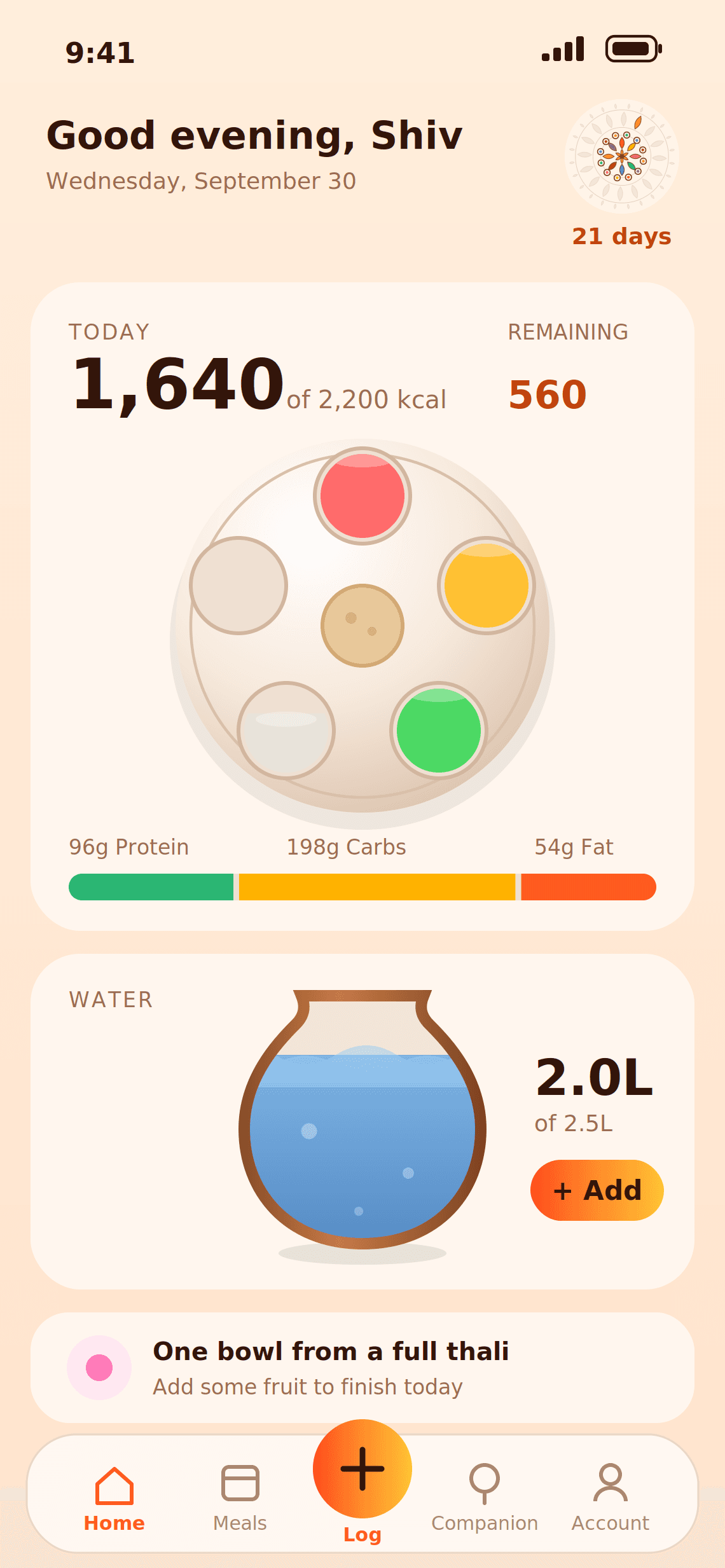
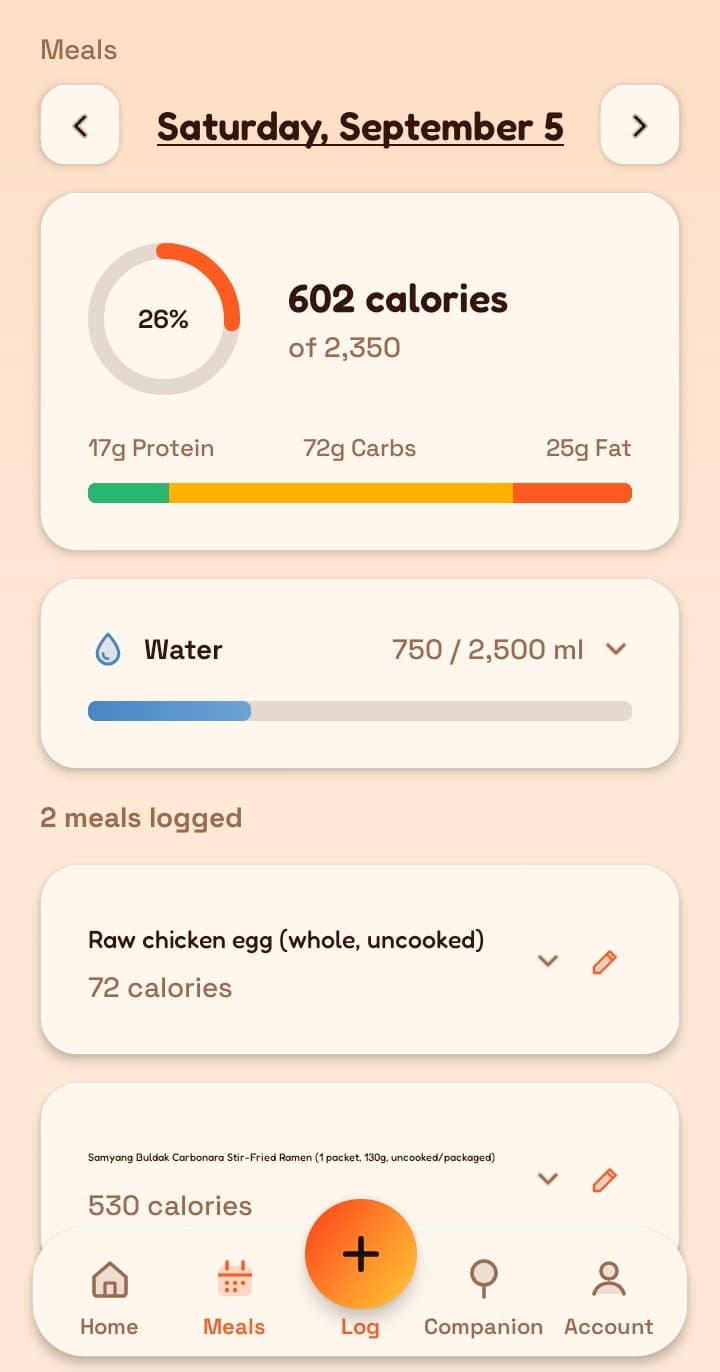
Be one of the first to use Katori.
Snap one photo and Katori reads the whole thali, portions and all.
Join the waitlist