Urad dal calories: cup/katori and 100 g
Also called urid dal, ulundu paruppu, black gram dal, white urad dal and dhuli urad dal.
By Shivam Verma Updated 7 sources linked below
Urad dal, black gram cooked soft and finished with a little ghee, is about 152 calories and 9.3 g of protein in a 150 g katori, and 244 in a 240 g cup. That is more protein than masoor or moong dal for about the calories of toor dal. With no ghee a katori is 126; a restaurant pour takes it to 196.
152calories
Protein
9.3 g
Carbs
21.8 g
Fat
3.6 g
1 cup = a 240 ml US cup of the dish as served. UK, Canadian and Australian cups are 250 ml: add about 4%.
Founding 500
Your bowl is not exactly 150 g.
Katori is an iPhone app that counts your actual plate from one photo. Built for Indian food first.
No spam. One email at launch, then only if it matters. Privacy.
First 500 sign-ups get the badge, paid or free. 10% off Pro annual, expires 30 days after launch, replaces the trial.
About urad dal
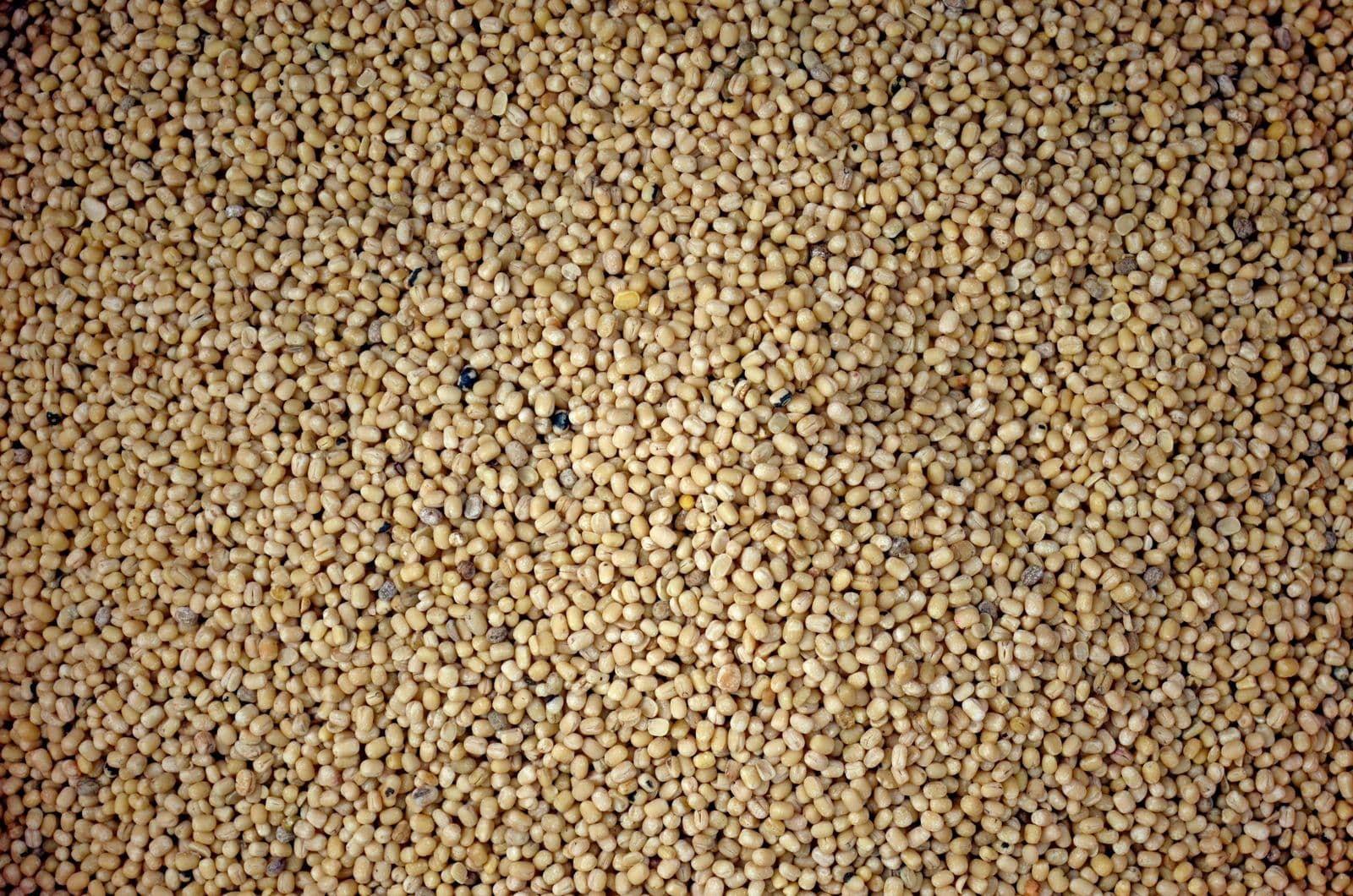
Urad dal is black gram. Split and skinned, it is the creamy white dhuli urad of idli batter, dosa batter and vada, and cooked as a dal on its own it is soft and thick. Whole, with the black skin on, it is sabut urad, the base of dal makhani.
Home vs takeout
The 37 g of black gram is the same in all three rows; only the ghee changes, at about 44 calories for every 5 g teaspoon.
| Version | 1 katori | 1 cup | Protein, 1 cup |
|---|---|---|---|
| Plain urad dal, no tadkaBlack gram simmered in water, with no ghee. | 126 | 202 | 14.9 g |
| Home, split (dhuli) or whole (sabut)HeadlineA light ghee tadka. USDA has one record for mature black gram seeds, so split and whole are modelled the same. | 152 | 244 | 14.9 g |
| Richer tadka8 g of ghee in the tempering, as a restaurant would. | 196 | 314 | 15.0 g |
Dhuli, chilka and sabut
Urad comes three ways. Dhuli urad is split and skinned: pale, quick to soften and smooth in the pot. Chilka urad is split with its black skin left on, so it cooks a little slower and turns the dal grey and speckled. Sabut urad is the whole bean, the slowest of the three, which holds its bite and is the form that goes into dal makhani.
USDA has one record for black gram, the mature seed, and it covers all three forms. Every number on this page uses it, so a katori of dhuli, chilka or sabut urad dal reads the same here. What changes between them is texture and cooking time, not a figure we can measure separately.
Urad beyond the dal pot
Much of the urad in an Indian kitchen never reaches a dal katori. Soaked and ground, dhuli urad goes into idli and dosa batter alongside rice. Medu vada is made from urad batter, shaped into rings and fried. Most papad is made from urad flour, rolled thin and dried. Each of these is its own food with its own numbers, and nothing on this page applies to them.
Urad dal and dal makhani
Dal makhani is sabut urad turned into a richer dish. Our restaurant katori uses 22 g of dry whole urad and 4 g of rajma, cooked slowly and finished with butter and cream. The lentils bring 89 calories to that katori; the butter and cream bring 41 percent of its calories.
So the two sit far apart. A katori of urad dal is 152 calories with 9.3 g of protein and 3.6 g of fat. A katori of dal makhani is 213 calories with 7.3 g of protein and 12.7 g of fat: 61 calories more, with less protein, because a smaller share of the bowl is dal.
If you love dal makhani and want something closer to everyday, a katori of urad dal with a light tadka keeps the flavour of the bean and drops the butter and the cream.
Dry urad, cooked urad and the katori
| Per 100 g | Calories | Protein |
|---|---|---|
| Dry, from the packet (dry urad) | 341 | 25.2 g |
| As served, with water and tadka | 102 | 6.2 g |
| Dry against served | 3.3 times | |
| Katoris from 100 g of dry dal | 2.7 |
Cooking adds water, which adds weight but no calories, so check which figure a label or an app means before you log it.
Urad dal with rice or roti
Is urad dal healthy?
Urad gives more protein a katori than masoor dal or moong dal: 9.3 g, against 9.1 g for masoor and 8.8 g for moong, all three built from the same dry weight.
What trials of pulses found
These findings are for pulses as a group, not for urad dal alone. A katori of urad dal here is 152 calories, with 9.3 g of protein and 6.8 g of fibre.
- Weight: a meta-analysis of 21 randomised trials found that diets including pulses, a median of about 132 g a day or roughly one serving, gave a weight reduction of 0.34 kg over a median of six weeks against diets without them, a modest effect.[4]
- Fullness: a review of feeding trials found that pulse meals gave 31 percent greater short-term satiety than meals with the same calories, but did not reduce what people ate at the next meal.[5]
- Blood sugar: a meta-analysis of 41 trials found that pulses, alone or in low glycaemic index or high-fibre diets, improved markers of longer-term glycaemic control, with high heterogeneity between studies.[6]
- Glycaemic index: the 2021 international tables found that legumes were usually low GI, 55 or under.[7] We do not quote a figure for any single dal.
If you manage your weight or your blood sugar for a medical reason, ask your doctor or a registered dietitian how dal fits your plan.
Urad dal vs related dishes
| Dish | 1 katori | 1 cup | Protein, 1 katori |
|---|---|---|---|
| Urad dal | 152 | 244 | 9.3 g |
| Dal makhani | 213 | 341 | 7.3 g |
| Toor dal | 153 | 245 | 8.0 g |
| Moong dal | 155 | 247 | 8.8 g |
| Masoor dal | 176 | 281 | 9.1 g |
How we calculated this
Every number on this page is for 1 katori (150 g), worked out from the recipe below. Cup and 100 g figures are scaled from it.
- Whole urad dal, dry37 g
- Ghee3 g
- Cumin, turmeric, gingertrace
- Water110 g
Black gram, 37 g dry, cooked to a 150 g katori and finished with 3 g of ghee.
Ingredient values from USDA FoodData Central. USDA has one record for mature black gram seeds, the whole bean; split and whole urad are modelled the same.
Confidence: high
Sources
- USDA FoodData Central 174259: Mungo beans, mature seeds, raw
- USDA FoodData Central 173412: Butter oil, anhydrous
- USDA FoodData Central 170923: Spices, cumin seed
- Kim SJ et al. Effects of dietary pulse consumption on body weight: a systematic review and meta-analysis of randomized controlled trials. Am J Clin Nutr, 2016.
- Li SS et al. Dietary pulses, satiety and food intake: a systematic review and meta-analysis of acute feeding trials. Obesity, 2014.
- Sievenpiper JL et al. Effect of non-oil-seed pulses on glycaemic control: a systematic review and meta-analysis of randomised controlled experimental trials in people with and without diabetes. Diabetologia, 2009.
- Atkinson FS, Brand-Miller JC, Foster-Powell K, Buyken AE, Goletzke J. International tables of glycemic index and glycemic load values 2021: a systematic review. Am J Clin Nutr, 2021.
Common questions
How many calories are in 1 katori of urad dal?
About 152, for 150 g of black gram dal finished with 3 g of ghee. Without the ghee it is 126, and with the 8 g a restaurant might use, 196.
How much protein is in urad dal?
9.3 g in a katori. That is 6.2 g in every 100 g of the dal as served, and 25.2 g in 100 g of dry black gram before it is cooked.
Is urad dal good for weight loss?
A katori is 152 calories with 6.8 g of fibre and 9.3 g of protein; see the research summary on this page. Most of the gap between a light and a heavy katori is ghee: 126 calories with none, 196 with a restaurant tadka.
Does urad dal spike blood sugar?
Black gram is a pulse, and a katori of urad dal holds 21.8 g of carbohydrate with 6.8 g of fibre. See the research summary on this page.
Which dal is high in calories?
Of the dals we have built from a recipe, dal makhani is the highest, at 213 calories a katori and 142 per 100 g. Urad dal is the lowest, at 152 a katori and 102 per 100 g. For protein rather than calories, see which dal has the most protein. We only rank dals we have built from a recipe.
How many calories are in urad dal per 100 g?
As served, with its water and ghee, 102 calories and 6.2 g of protein. Dry black gram is 341 calories per 100 g, because the dry bean holds none of the cooking water.
Is urad dal better than moong dal?
Here is how one katori of each compares. Urad dal is 152 calories, with 9.3 g of protein and 6.8 g of fibre; moong dal is 155 calories, with 8.8 g of protein and 6.0 g of fibre.
What is the difference between urad dal and dal makhani?
The bean is the same, the dish is not. Urad dal is the split or whole bean cooked with a light tadka, 152 calories a katori. Dal makhani is whole urad with a little rajma, slow cooked and finished with butter and cream, 213 calories a katori, 41 percent of them from the butter and cream.
These figures are estimates from stated recipes, for general information. They are not medical or dietary advice. If you manage a health condition, check with a registered dietitian or your doctor.
Related dishes
Founding 500
Be one of the original 500.
Permanent badge, plus 10% off your first year of Pro.
Snap one photo and get these numbers for your actual plate, not a generic entry. Built for Indian food first.
No spam. One email at launch, then only if it matters. Privacy.
First 500 sign-ups get the badge, paid or free. 10% off Pro annual, expires 30 days after launch, replaces the trial.