Idli calories: 1 idli, 2 idli and 4 idli
Also called idly, steamed rice cake and plain idli.
By Shivam Verma Updated 12 sources linked below
Two medium idli, 100 g, have about 122 calories, 4.0 g of protein and 0.3 g of fat; 100 g is the same 122. One idli is 61 and four are 244. With a katori of sambar the pair comes to 231, and a rava idli pair, made with semolina, is 138.
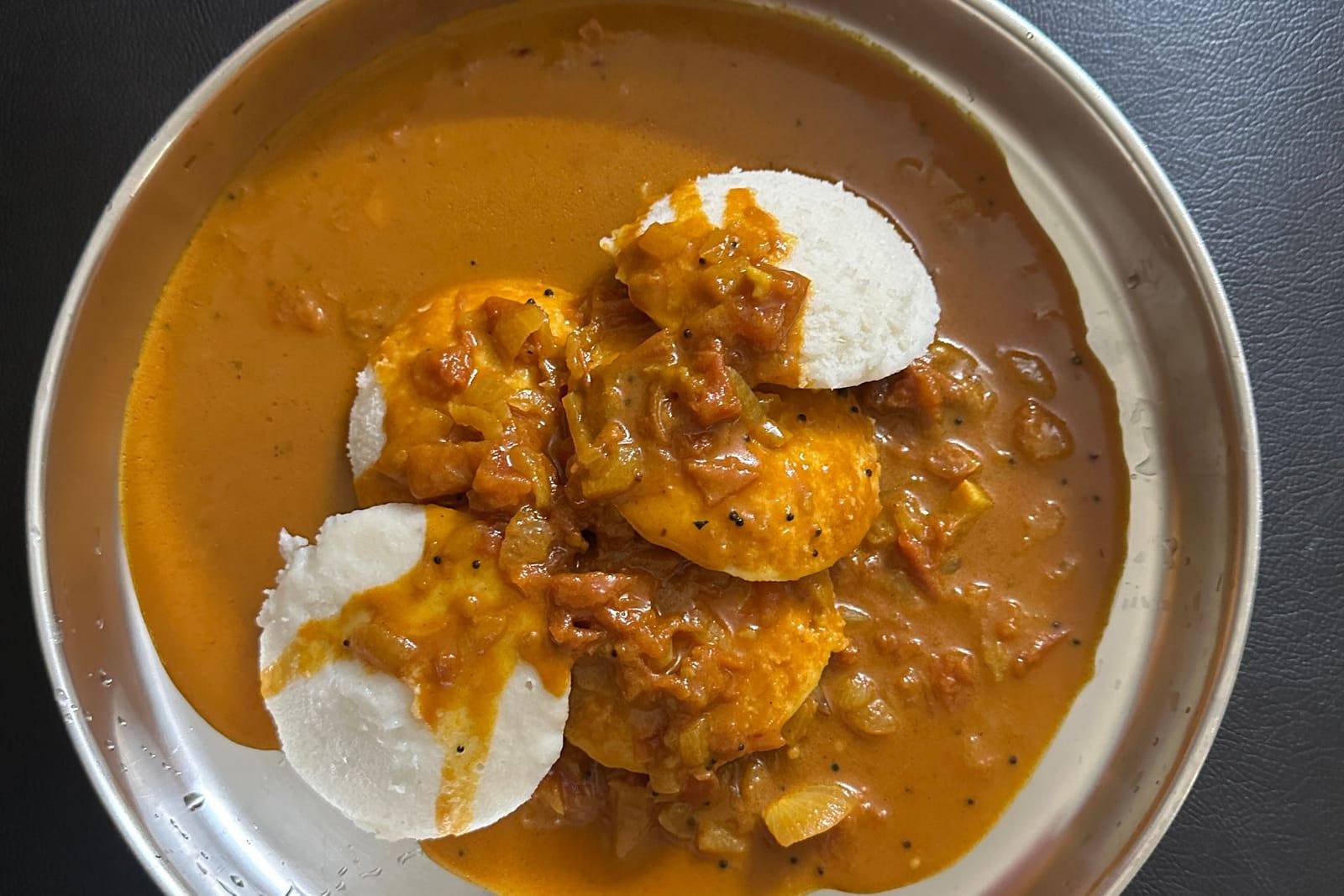
122calories
Protein
4.0 g
Carbs
25.4 g
Fat
0.3 g
Founding 500
Your 2 idlis are not exactly 100 g.
Katori is an iPhone app that counts your actual plate from one photo. Built for Indian food first.
No spam. One email at launch, then only if it matters. Privacy.
First 500 sign-ups get the badge, paid or free. 10% off Pro annual, expires 30 days after launch, replaces the trial.
About idli
Idli are small steamed cakes of fermented rice and urad dal batter, the plainest breakfast on the South Indian table. Nothing is fried and no fat goes into the batter, so an idli is almost all rice starch with a little protein from the urad. We count a medium idli at 50 g as it comes out of the mould, two to a serving, with the water in the batter staying in the cake: we assume steaming loses none. The calories you eat with idli usually arrive from the sides, the sambar and above all the coconut chutney, not from the idli.
Home vs takeout
All three rows are two idli. The plain pair is the headline; the rava pair swaps the rice and urad batter for 30 g of semolina set with curd and a little oil; the restaurant plate adds a 150 g katori of sambar and 30 g of coconut chutney to the plain pair.
| Version | 2 medium idli | Protein, 2 medium idli |
|---|---|---|
| 2 idli, plainHeadlineSteamed, no fat. | 122 | 4.0 g |
| 2 rava idliSemolina, curd and a little oil. | 138 | 4.5 g |
| Restaurant plate: 2 idli, sambar, chutneyThe pair with a katori of sambar and coconut chutney. | 308 | 9.8 g |
Two idli, three ways
Plain, the pair is 122 calories with 0.3 g of fat: the batter holds 66 g of water, and steaming keeps it in, which is why idli is so light for its size. Rava idli, made with semolina instead of rice and urad, comes to 138 for two, with 3.0 g of fat from the curd and the oil and 4.5 g of protein against 4.0 g.
The restaurant plate is a different meal: 308 calories and 10.6 g of fat in 280 g. The sambar adds 109 calories and the coconut chutney 77, 6.3 g of it fat, so the chutney is the one side to watch.
Idli and dosa batter is rice and urad dal soaked, ground and left to ferment overnight. We count it as three parts raw rice to one part urad by dry weight; that ratio is our assumption, because home ratios range widely. Fermentation makes the batter rise and sour, and we assume it changes no calories. 2 medium idli of idli here holds 25.5 g of raw rice and 8.5 g of urad dal, 122 of its 122 calories; the rest is water and whatever fat the pan or the filling adds.
With sambar and chutney
Sambar is the better partner on numbers: it brings protein from the toor dal for few calories, and a katori of it with two idli makes 231 calories and 8.5 g of protein. Chutney is eaten by the spoon and rarely measured, which is why its calories go uncounted more often than the idli's.
It usually arrives with sambar and coconut chutney. A katori of sambar here is 150 g from its own recipe, and a serving of coconut chutney 30 g of fresh coconut, roasted chana, a little oil and water.
| Plate | Calories | Protein | Fat |
|---|---|---|---|
| 2 medium idli of idli on its own | 122 | 4.0 g | 0.3 g |
| With 1 katori of sambar | 231 | 8.5 g | 4.4 g |
| With 30 g of coconut chutney | 199 | 5.3 g | 6.6 g |
| With both | 308 | 9.8 g | 10.6 g |
The coconut chutney carries most of the side's fat: fresh coconut is about a third fat by weight.
Against USDA's survey record
USDA's survey record for idli is 128 calories per 100 g; ours, at 122, is 5 percent below it. It weighs one idli at 38 g and gives 76 g, two of its idli, when nobody said how many. The record is built from cooked glutinous rice and split peas rather than a raw rice and urad batter, so the closeness is partly luck; our idli is the larger one, at 50 g.[12]
Idli against dosa and rice
From the same batter, a medium plain dosa of 54 g is 136 calories, because the tava drives off water and adds oil; a restaurant dosa cooked in ghee is 171. Two idli at 122 sit under a katori of plain rice at 156, and gram for gram idli is a touch lighter, 122 per 100 g against 130.
What the urad dal brings
Urad dal is 25 percent of the dry batter, yet it carries 54 percent of the pair's protein and 82 percent of its fibre, for 24 percent of the calories. Rice is the bulk and the starch; the urad is why idli has 4.0 g of protein per 100 g against 2.7 g for plain boiled rice. The two dry ingredients are close in calories per gram, so a batter with more urad, as some kitchens make for softer idli, adds protein while barely moving the calories.
Is idli healthy?
As a breakfast it is low in fat and modest in calories, with 4.0 g of protein for the pair, 3.2 g per 100 calories, and 1.9 g of fibre. On its own it is mostly starch; the sambar beside it adds the protein and vegetables.
One serving of idli carries 4.0 g of protein and 0.3 g of fat, 0.1 g of it saturated: 3.2 g of protein for every 100 calories. The ghee page sets the NHS and American Heart Association limits for saturated fat side by side.
Related guide: Indian Food for Weight Loss: Eat This, Skip That
How we calculated this
Every number on this page is for 2 medium idli (100 g), worked out from the recipe below. Piece and 100 g figures are scaled from it.
Correction, November 6, 2026: rebuilt from a stated recipe using USDA FoodData Central values, with the batter, the dough and the frying oil each stated in grams. This page listed idli at 120 calories for 2 medium idli. It now counts 2 medium idli (100 g) at 122 calories.
- Rice, raw (in the batter)25.5 g
- Urad dal, dry (in the batter)8.5 g
- Water, in the batter66 g
Two medium idli of 50 g each. The batter is raw rice and urad dal, three to one by dry weight, our assumption; no water is assumed lost in steaming.
USDA FoodData Central SR Legacy for every ingredient, with USDA's survey record for idli as a cross-check.
Confidence: high
Sources
- USDA FoodData Central 168877: Rice, white, long-grain, regular, raw, enriched
- USDA FoodData Central 174259: Mungo beans, mature seeds, raw
- USDA FoodData Central 169715: Semolina, enriched
- USDA FoodData Central 171284: Yogurt, plain, whole milk
- USDA FoodData Central 171411: Oil, soybean, salad or cooking
- USDA FoodData Central 170923: Spices, cumin seed
- USDA FoodData Central 172436: Pigeon peas (red gram), mature seeds, raw
- USDA FoodData Central 169228: Eggplant, raw
- USDA FoodData Central 167763: Tamarinds, raw
- USDA FoodData Central 170169: Nuts, coconut meat, raw
- USDA FoodData Central 173756: Chickpeas (garbanzo beans, bengal gram), mature seeds, raw
- USDA FoodData Central 2708346: Idli
Common questions
How many calories in 2 idli?
About 122 for two medium idli of 100 g, with 4.0 g of protein and 25.4 g of carbohydrate.
How many calories in 1 idli?
About 61 for a medium idli of 50 g, with 2.0 g of protein.
How many calories in 4 idli?
About 244, with 7.9 g of protein. Five hundred calories of plain idli is about 8 of them.
Is idli good for weight loss?
Two plain idli are 122 calories with 0.3 g of fat. The plate they come on decides more: with sambar and coconut chutney it is 308.
Is idli healthier than rice?
On calories they are close: two idli are 122, a katori of plain rice 156. Idli carries a little more protein from the urad dal, 4.0 g against 3.2 g.
How many calories in idli with sambar?
Two idli with a 150 g katori of sambar come to about 231 calories and 8.5 g of protein.
How many calories in rava idli?
About 138 for two, against 122 for two plain rice idli; the curd and oil in the semolina batter add the difference.
How much protein is in idli?
Two medium idli have 4.0 g, 54 percent of it from the urad dal in the batter; with a katori of sambar the pair comes to 8.5 g.
These figures are estimates from stated recipes, for general information. They are not medical or dietary advice. If you manage a health condition, check with a registered dietitian or your doctor.
Related dishes
Founding 500
Be one of the original 500.
Permanent badge, plus 10% off your first year of Pro.
Snap one photo and get these numbers for your actual plate, not a generic entry. Built for Indian food first.
No spam. One email at launch, then only if it matters. Privacy.
First 500 sign-ups get the badge, paid or free. 10% off Pro annual, expires 30 days after launch, replaces the trial.