Poha calories: 1 plate and 100 g
Also called pohe, aval and kanda batata poha.
By Shivam Verma Updated 8 sources linked below
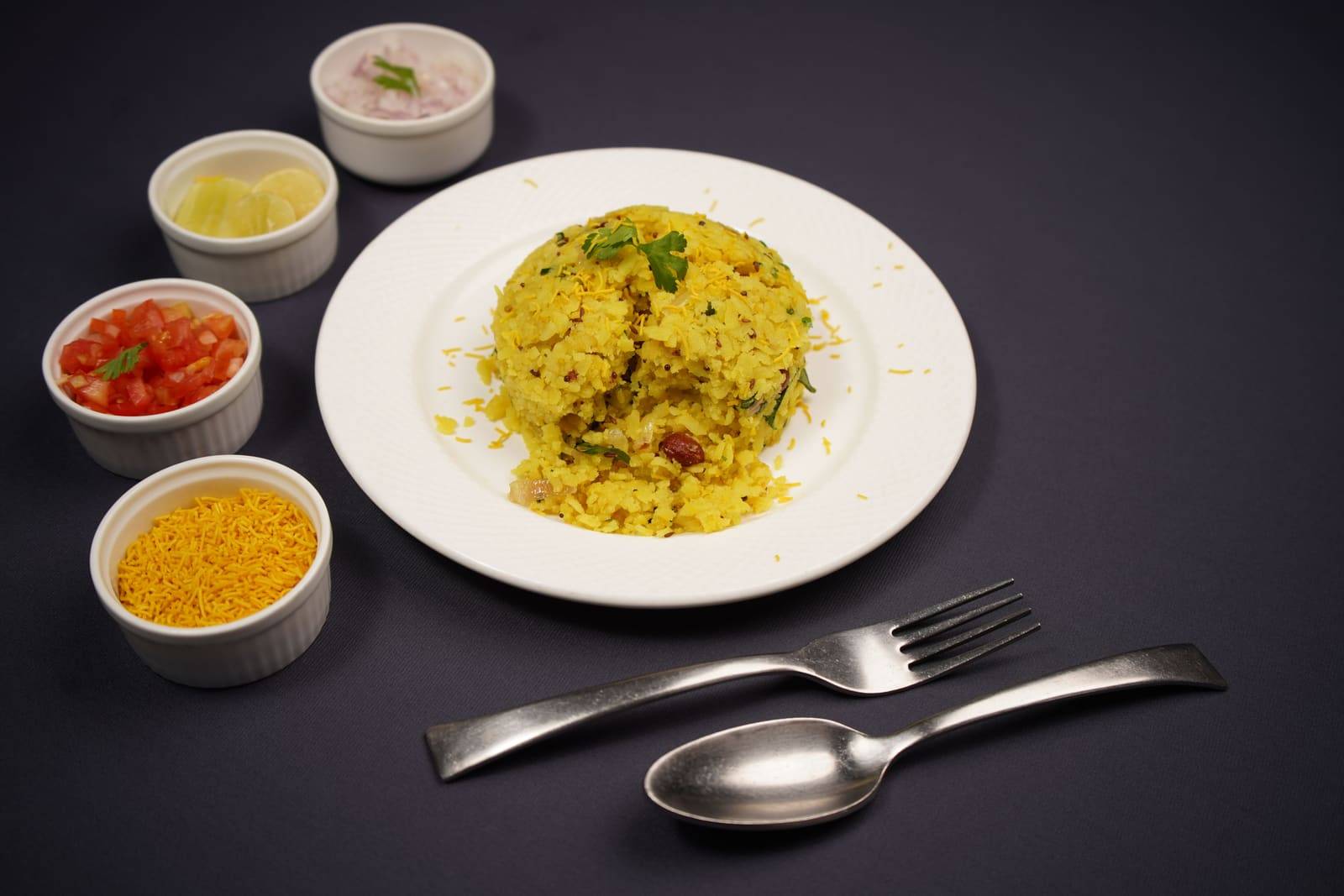
One plate of home poha, 140 g with potato and peanuts, has about 270 calories, 5.6 g of protein and 10.2 g of fat, or 193 per 100 g. Light kanda poha without the potato and peanuts is 191, and a street plate topped with sev is 352.
270calories
Protein
5.6 g
Carbs
39.1 g
Fat
10.2 g
Founding 500
Your plate is not exactly 140 g.
Katori is an iPhone app that counts your actual plate from one photo. Built for Indian food first.
No spam. One email at launch, then only if it matters. Privacy.
First 500 sign-ups get the badge, paid or free. 10% off Pro annual, expires 30 days after launch, replaces the trial.
About poha
Poha is flattened rice, rinsed until it softens, then tossed in a hot pan with oil, mustard seed, curry leaves, turmeric, onion and usually potato, finished with lemon and coriander. The Maharashtrian kanda batata poha adds peanuts. Our plate starts from 40 g of dry poha, which drinks up 50 g of water in the rinse. USDA has no record for flattened rice, so we count it as raw white rice, the grain it is pressed from: our stated proxy.
Home vs takeout
The poha and the onion are the same in all three. The light plate drops the potato and peanuts and uses 4 g of oil; home adds them with 6 g; the street plate adds more peanuts, more oil and a handful of sev.
| Version | 1 plate | Protein, 1 plate |
|---|---|---|
| Home, with potato and peanutsHeadlineKanda batata poha. | 270 | 5.6 g |
| Light kanda pohaNo potato or peanuts, less oil. | 191 | 3.1 g |
| Street, with sevMore oil and peanuts, topped with sev. | 352 | 7.7 g |
Peanuts, potato and sev
On the home plate the poha itself brings 54 percent of the calories, the oil 20 percent, the peanuts 17 percent and the onion and potato 9 percent. The 8 g of peanuts are only a spoonful, yet they are 45 calories and 2.1 g of protein. The 20 g of potato add 15.
Sev, the crisp fried gram flour noodles a street vendor scatters on top, is 10 g on our street plate and 54 calories, and with the extra oil and peanuts it takes the plate to 352 with 16.7 g of fat.
A light plate
Leave out the potato and peanuts and cut the oil, and the plate is 110 g and 191 calories with 4.3 g of fat. That is the version people usually mean when they call poha light. The catch is protein: 3.1 g against 5.6 g on the home plate, because the peanuts go.
Is poha lighter than rice?
Not gram for gram: home poha is 193 calories per 100 g against 130 for plain boiled rice, because it is tempered in oil and carries peanuts. Nor by the plate: a 140 g plate of poha is 270, against 156 for a 120 g katori of rice, and the same 140 g of plain rice would be 182. The poha plate's fat is the difference, 10.2 g against 0.3 g; what it gives back is protein, 5.6 g against 3.2 g for the rice katori.
Poha against paratha and upma
A home aloo paratha is 242, and a katori of upma, another quick breakfast, 235.
| Dish | Serving | Calories | Protein | Fat |
|---|---|---|---|---|
| Samosa | 1 medium samosa (90 g) | 261 | 3.8 g | 15.3 g |
| Pani puri | 1 plate (6 puris, 197 g) | 270 | 6.1 g | 9.8 g |
| Poha | 1 plate (140 g) | 270 | 5.6 g | 10.2 g |
| Upma | 1 katori (150 g) | 235 | 6.6 g | 6.6 g |
| Chole bhature | 1 plate (2 bhature, 1 katori chole, 302 g) | 762 | 18.7 g | 32.0 g |
One serving of each, from its stated recipe. The servings differ, so compare a dish with its own serving before comparing two dishes.
Oats or poha
Weighed dry, the 40 g of poha on our plate is 146 calories with 2.9 g of protein and 0.5 g of fibre, counted as rice. The same weight of rolled oats is 152 calories with 5.3 g of protein and 4.0 g of fibre. On calories the two grains are close; oats carry more protein and far more fibre. What makes either breakfast heavy is what goes into the pan or the bowl with it: on a plate of poha, the oil, peanuts and potato.[8]
What the rice proxy could change
Poha is pressed from rice, and we count it as raw white rice because USDA has no record for flattened rice. The poha is 54 percent of the plate's calories, so if flattened rice differed from raw rice by a tenth either way, the plate would move by about 15 calories, to 255 or 284. That uncertainty is why this page's confidence is medium rather than high.
Is poha healthy?
It is a light, quick breakfast with 2.0 g of fibre and 5.6 g of protein a plate, 2.1 g per 100 calories. The peanuts are its main protein, and the sev its main extra fat. Of the home plate's 10.2 g of fat, 6.0 g is the cooking oil and 3.9 g the peanuts; the grain and vegetables bring the rest.
One plate of poha carries 5.6 g of protein and 10.2 g of fat, 1.5 g of it saturated: 2.1 g of protein for every 100 calories. The ghee page sets the NHS and American Heart Association limits for saturated fat side by side.
How we calculated this
Every number on this page is for 1 plate (140 g), worked out from the recipe below. Piece and 100 g figures are scaled from it.
Correction, November 6, 2026: rebuilt from a stated recipe using USDA FoodData Central values, with the batter, the dough and the frying oil each stated in grams. This page listed poha at 250 calories for 1 plate (1 cup, ~150 g). It now counts 1 plate (140 g) at 270 calories.
- Poha (flattened rice), dry: counted as raw rice40 g
- Water absorbed in soaking50 g
- Oil6 g
- Peanuts8 g
- Onion25 g
- Potato20 g
- Mustard seed, curry leaves, turmeric, lemontrace
- Water lost in the pan9 g lost
One plate of 140 g. USDA has no flattened rice record, so poha is counted as raw white rice, our stated proxy; the water lost is what leaves the pan.
USDA FoodData Central SR Legacy for every ingredient. USDA has no survey record for poha to cross-check against.
Confidence: medium
Sources
- USDA FoodData Central 168877: Rice, white, long-grain, regular, raw, enriched
- USDA FoodData Central 171411: Oil, soybean, salad or cooking
- USDA FoodData Central 172430: Peanuts, all types, raw
- USDA FoodData Central 170000: Onions, raw
- USDA FoodData Central 170026: Potatoes, flesh and skin, raw
- USDA FoodData Central 170923: Spices, cumin seed
- USDA FoodData Central 174288: Chickpea flour (besan)
- USDA FoodData Central 173904: Cereals, oats, regular and quick, not fortified, dry
Common questions
How many calories in 1 plate of poha?
About 270 for a home plate of 140 g with potato and peanuts, and 191 without them.
Is poha OK for weight loss?
A light plate is 191 calories with 4.3 g of fat; the street plate with sev is 352. The oil, peanuts and sev decide which one you are eating.
Is poha lighter than rice?
Not gram for gram: home poha is 193 calories per 100 g against 130 for plain rice, because poha is tempered in oil. A plate of poha is 270; a katori of rice 156.
Is poha better than aloo paratha for breakfast?
On calories, a plate of home poha is 270 and a home aloo paratha 242. Poha is easier to make light.
How many calories do peanuts add to poha?
About 45 for 8 g, with 2.1 g of protein.
How many calories in 100 g of poha?
193 for home poha with potato and peanuts.
Oats or poha for breakfast?
Dry for dry they are close in calories, 152 for 40 g of rolled oats against 146 for the same weight of poha; oats bring more protein and fibre. The oil, nuts and potato decide the rest.
How much protein is in poha?
About 5.6 g in a home plate, 2.1 g of it from the peanuts; the light plate without them has 3.1 g.
These figures are estimates from stated recipes, for general information. They are not medical or dietary advice. If you manage a health condition, check with a registered dietitian or your doctor.
Related dishes
Founding 500
Be one of the original 500.
Permanent badge, plus 10% off your first year of Pro.
Snap one photo and get these numbers for your actual plate, not a generic entry. Built for Indian food first.
No spam. One email at launch, then only if it matters. Privacy.
First 500 sign-ups get the badge, paid or free. 10% off Pro annual, expires 30 days after launch, replaces the trial.