Pani puri calories: 1 puri, 6 puris and 100 g
Also called golgappa, gol gappe, puchka, phuchka and panipuri.
By Shivam Verma Updated 11 sources linked below
One plate of pani puri, six puris with filling and pani, 197 g, has about 270 calories, 6.1 g of protein and 9.8 g of fat, or 137 per 100 g. One filled puri with its pani is 45. Without the filling a plate is 214, and with the sweet chutney a street vendor adds, 303.
270calories
Protein
6.1 g
Carbs
40.1 g
Fat
9.8 g
Founding 500
Your plate is not exactly 197 g.
Katori is an iPhone app that counts your actual plate from one photo. Built for Indian food first.
No spam. One email at launch, then only if it matters. Privacy.
First 500 sign-ups get the badge, paid or free. 10% off Pro annual, expires 30 days after launch, replaces the trial.
About pani puri
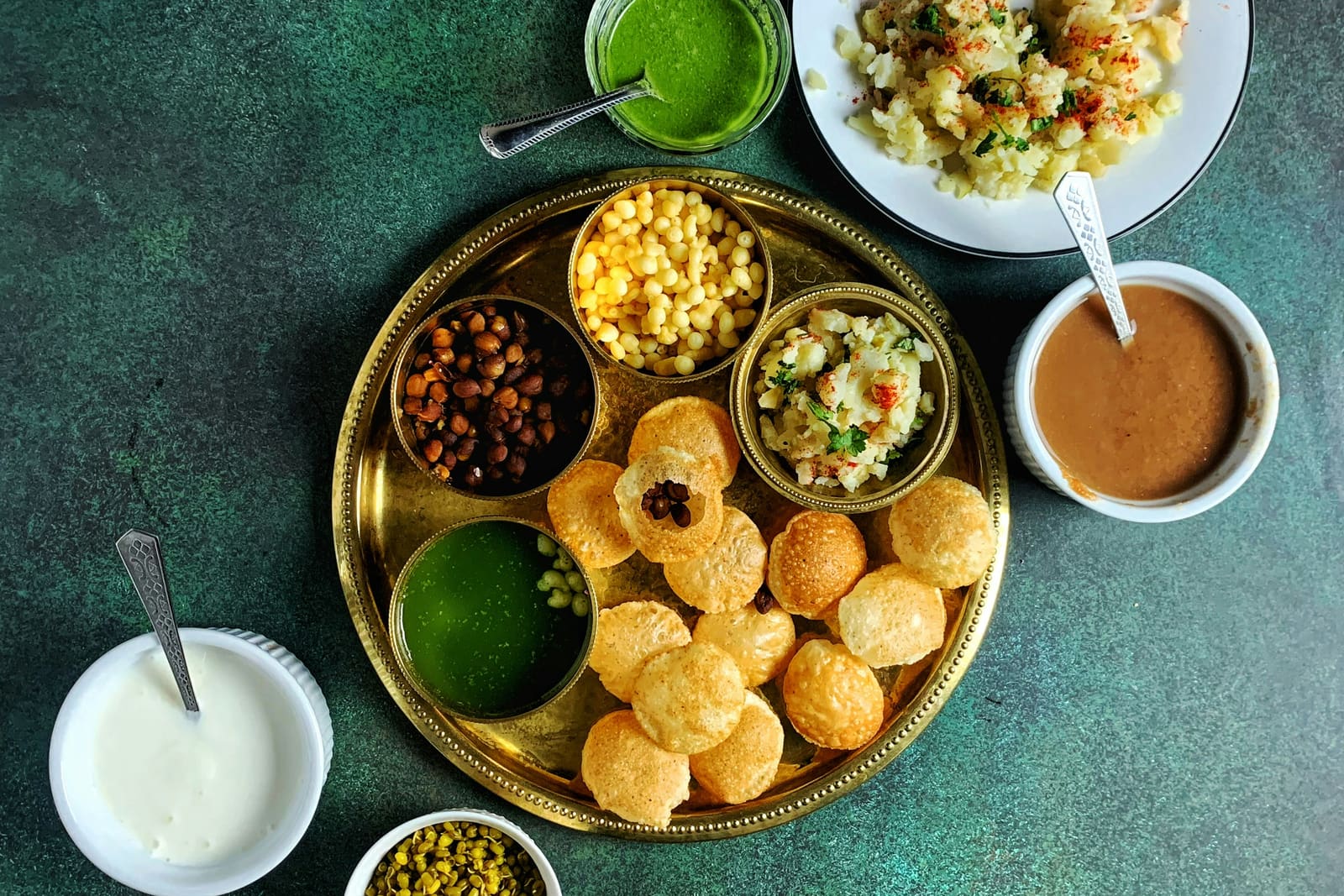
Pani puri is crisp hollow shells of semolina and a little maida, cracked open, filled with spiced potato and chickpeas and dunked in a sharp, sour pani of tamarind, mint and spice, each one eaten in a single bite. It goes by golgappa in Delhi, puchka in Kolkata and gupchup in Odisha. We count the pani because it is drunk, every drop, and it carries the tamarind and sugar.
Home vs takeout
The headline plate is six puris with filling and a plain tamarind pani. The street plate adds a sweet tamarind chutney; the air-fried plate keeps everything else and fries the shells with far less oil.
| Version | 1 plate | Protein, 1 plate |
|---|---|---|
| Plate of 6, filling and paniHeadlinePlain tamarind pani. | 270 | 6.1 g |
| Street, with sweet chutneyMore tamarind and sugar. | 303 | 6.2 g |
| Air-fried shellsThe shells fried with far less oil. | 208 | 6.1 g |
Six puris, and the pani counts
Of the plate's 270 calories, the shells bring 69 percent, 188 calories in 39 g, the filling 21 percent and the pani 10 percent. The shells are small but fried: they take up 9 g of oil, which is why they are 482 calories per 100 g on their own.
The pani is 99 g of the plate and 26 calories, almost all from tamarind and sugar. Leaving it out would make the plate look lighter than the one you eat.
One puri at a time
Each shell weighs about 6.5 g once fried and is 31 calories, 13 of them from the oil it took up. Filled and dunked, one puri is about 32.8 g and 45 calories. A vendor keeps filling until you say stop, so the count is the number to watch: two plates of six come to 541.
Street and air-fried
A street plate with sweet chutney is 303 calories in 207 g: the chutney adds 4 g of tamarind and 6 g of sugar, 33 calories. Air-fried shells take up 2 g of oil instead of 9 g and save 62 calories, bringing the plate to 208 with 2.8 g of fat. A medium samosa, 90 g, is 261 on its own.
Against USDA's survey record
USDA has no pani puri record. Its puri, a larger fried bread of white and whole wheat flour, is 409 calories per 100 g, 18 percent from our shells; it weighs one at 36 g. It is a different bread, so we name it and do not lean on it.[10]
Is pani puri healthy?
A plate is a fried snack with 6.1 g of protein, 2.2 g per 100 calories, and 3.1 g of fibre. Per 100 g it is lighter than a samosa, 137 against 290, because the pani is water; per plate it is a small meal.
One plate of pani puri carries 6.1 g of protein and 9.8 g of fat, 1.5 g of it saturated: 2.2 g of protein for every 100 calories. The ghee page sets the NHS and American Heart Association limits for saturated fat side by side.
What studies of fried food found
In one plate of pani puri, the oil soaked up in the fryer is 9.0 g, 80 of the 270 calories. A meta-analysis of observational studies compared people who ate the most fried food with those who ate the least: across 17 studies, the highest intake was associated with a relative risk of 1.28 for major cardiovascular events, from 1.15 to 1.43. It found no clear link with dying of cardiovascular disease or of any cause.[11]
The authors themselves ask readers to weigh the high heterogeneity between studies, 82 percent, and possible recall and misclassification biases in how fried food was reported. These are observational studies: they show an association, not that fried food causes heart disease, and they say nothing about a single plate.
| Dish | Serving | Calories | Protein | Fat |
|---|---|---|---|---|
| Samosa | 1 medium samosa (90 g) | 261 | 3.8 g | 15.3 g |
| Pani puri | 1 plate (6 puris, 197 g) | 270 | 6.1 g | 9.8 g |
| Poha | 1 plate (140 g) | 270 | 5.6 g | 10.2 g |
| Upma | 1 katori (150 g) | 235 | 6.6 g | 6.6 g |
| Chole bhature | 1 plate (2 bhature, 1 katori chole, 302 g) | 762 | 18.7 g | 32.0 g |
One serving of each, from its stated recipe. The servings differ, so compare a dish with its own serving before comparing two dishes.
How we calculated this
Every number on this page is for 1 plate (6 puris, 197 g), worked out from the recipe below. Piece and 100 g figures are scaled from it.
- Shells: semolina24 g
- Shells: maida6 g
- Shells: water12 g
- Shells: oil absorbed in frying9 g
- Shells: water lost in frying12 g lost
- Filling: potato36 g
- Filling: chickpeas, dry7 g
- Filling: water10 g
- Filling: onion6 g
- Pani and chutney: tamarind6 g
- Pani and chutney: sugar3 g
- Pani: water90 g
- Pani: mint, coriander, cumin, black salt, chillitrace
One plate of 6 puris, 197 g in all: the shells, the potato and chickpea filling and the pani, counted together because the pani is drunk. The oil absorbed in frying the shells is its own line.
USDA FoodData Central SR Legacy for every ingredient. USDA has no pani puri record; its puri bread is noted for comparison.
Confidence: medium
Sources
- USDA FoodData Central 169715: Semolina, enriched
- USDA FoodData Central 168894: Wheat flour, white, all-purpose, enriched, bleached
- USDA FoodData Central 171411: Oil, soybean, salad or cooking
- USDA FoodData Central 170026: Potatoes, flesh and skin, raw
- USDA FoodData Central 173756: Chickpeas (garbanzo beans, bengal gram), mature seeds, raw
- USDA FoodData Central 170000: Onions, raw
- USDA FoodData Central 167763: Tamarinds, raw
- USDA FoodData Central 169655: Sugars, granulated
- USDA FoodData Central 170923: Spices, cumin seed
- USDA FoodData Central 2707714: Bread, puri
- Qin P, Zhang M, Han M, et al. Fried-food consumption and risk of cardiovascular disease and all-cause mortality: a meta-analysis of observational studies. Heart, 2021;107(19):1567-1575.
Common questions
How many calories in 6 pani puri?
About 270 for a plate of six with filling and pani, 197 g.
How many calories in 1 pani puri?
About 45 for one filled puri with its share of pani, about 32.8 g.
How many calories in pani puri without filling?
About 214 for six shells with pani and no potato or chickpeas.
Is pani puri good for weight loss?
A plate of six is 270 calories with 9.8 g of fat; with air-fried shells it is 208.
Does the pani have calories?
Yes, about 26 on a plate, from the tamarind and sugar.
How many calories in 100 g of pani puri?
137 for the whole plate, pani included; the shells alone are 482.
Is pani puri fried?
The shells are: a plate of six takes up 9 g of oil in the fryer. The potato filling and the pani are not fried.
How much sugar is in pani puri?
Our pani is sweetened with 3.0 g of sugar a plate, with more natural sugar in the tamarind. The sweet chutney on a street plate takes the added sugar to 9.0 g.
These figures are estimates from stated recipes, for general information. They are not medical or dietary advice. If you manage a health condition, check with a registered dietitian or your doctor.
Related dishes
Founding 500
Be one of the original 500.
Permanent badge, plus 10% off your first year of Pro.
Snap one photo and get these numbers for your actual plate, not a generic entry. Built for Indian food first.
No spam. One email at launch, then only if it matters. Privacy.
First 500 sign-ups get the badge, paid or free. 10% off Pro annual, expires 30 days after launch, replaces the trial.