Rajma chawal calories: 1 katori of rajma, 1 plate and 100 g
Also called rajma rice and kidney bean curry with rice.
By Shivam Verma Updated 12 sources linked below
One plate of home rajma chawal, a katori of rajma and a katori of rice, 270 g, has about 347 calories, 12.0 g of protein and 6.8 g of fat, or 129 per 100 g. The katori of rajma alone is 191. A restaurant plate with more rice and butter is 489.
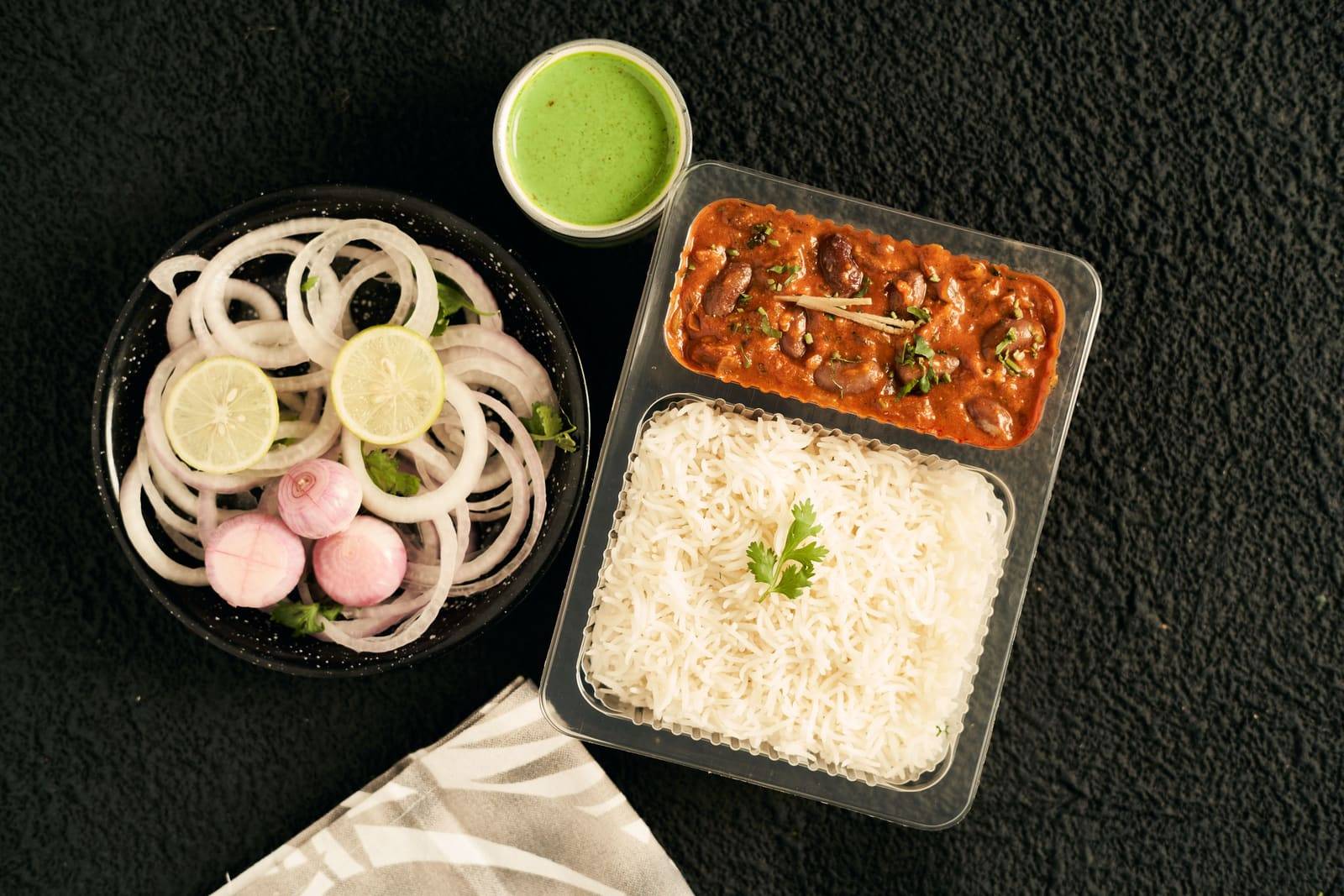
347calories
Protein
12.0 g
Carbs
59.5 g
Fat
6.8 g
Founding 500
Your plate is not exactly 270 g.
Katori is an iPhone app that counts your actual plate from one photo. Built for Indian food first.
No spam. One email at launch, then only if it matters. Privacy.
First 500 sign-ups get the badge, paid or free. 10% off Pro annual, expires 30 days after launch, replaces the trial.
About rajma chawal
Rajma chawal is the Punjabi Sunday lunch: red kidney beans soaked overnight, pressure cooked and simmered in an onion, tomato, ginger and garlic masala until thick, spooned over plain rice. Our katori of rajma starts from 37 g of dry beans with 6 g of oil, and the rice is a 120 g katori, the site's served katori of cooked rice. By calories the rajma brings 55 percent of the plate and the rice 45 percent.
Home vs takeout
The home plate is a katori of each. The restaurant plate has 180 g of rice and a rajma with 10 g of oil and 5 g of butter. The light plate keeps the rice and halves the rajma's oil to 3 g.
| Version | 1 plate | Protein, 1 plate |
|---|---|---|
| Home plate: 1 katori rajma, 1 katori riceHeadlineA katori of each. | 347 | 12.0 g |
| Restaurant plateMore rice, rajma with oil and butter. | 489 | 13.2 g |
| Light plateHalf the oil in the rajma. | 321 | 12.0 g |
How much rice is on the plate
The rice is the part of the plate that grows. A home katori of 120 g is 156 calories; the restaurant plate's 180 g is 234, and the rice becomes 48 percent of a plate of 489 calories. Ask for the rice on the side and the plate is yours to size.
The rajma itself moves with the fat: 191 calories a home katori, 255 in the restaurant style with butter. Its 6 g of oil at home is 53 calories.
Rajma, dry and cooked
Dry kidney beans are 337 calories and 22.5 g of protein per 100 g. Cooked in our katori they are 5.9 g of protein per 100 g, because the beans soak up water and the masala adds more. The protein is all still there: the 37 g of dry beans in a katori hold 8.3 g of it.
| Per 100 g | Calories | Protein |
|---|---|---|
| Dry, from the packet (dry rajma) | 337 | 22.5 g |
| The rajma as served, cooked with water | 127 | 5.9 g |
| Dry against served | 2.7 times | |
| Katoris of rajma from 100 g dry rajma | 2.7 |
Cooking adds water, which adds weight but no calories, so check which figure a label or an app means before you log it.
Chana or rajma: which has more protein?
A katori of our chana masala is 237 calories with 8.7 g of protein and 5.7 g of fibre; a katori of rajma is 191 with 8.8 g and 6.3 g. Rajma is the lighter katori in our recipes: fewer grams of beans go in, and a little less oil.
So per katori the two are close to level on protein. Per calorie rajma is clearly ahead, 4.6 g of protein for every 100 calories against 3.7 g for chana masala, and the reason is the bean itself: dry kidney beans carry 6.7 g of protein per 100 calories, dry chickpeas 5.4 g. Served over rice the plate dilutes it, and rajma chawal comes to 3.5 g per 100 calories.
Rajma with roti
In many homes rajma is eaten with roti as often as with rice. A katori of rajma with two plain rotis, 204 calories of bread, is 395 calories, 16.7 g of protein and 12.7 g of fibre, against 347, 12.0 g and 6.8 g on the plate with rice. The whole wheat brings more protein and fibre than the rice, and more calories with them.
The light plate
Halving the rajma's oil to 3 g makes a plate of 321 calories with 3.8 g of fat, 26 calories less than the home plate, with the same beans, rice and protein.
Against USDA's survey record
USDA's survey record for kidney beans and white rice is 158 calories per 100 g, and ours is 18 percent below it. It weighs a cup at 170 g. The record has about 60 g of beans cooked with fat in every 100 g; ours has 56 g of rajma, beans in a thin masala of onion, tomato and water, with the rest rice. So the record is denser in calories and in protein per gram.[8]
Is rajma chawal healthy?
On its own numbers the plate carries 12.0 g of protein, 3.5 g per 100 calories, 6.8 g of fibre and 6.8 g of fat. It has 59.5 g of carbohydrate and 1.1 g of saturated fat. Most of the protein and fibre is the rajma; most of the starch is the rice.
One plate of rajma chawal carries 12.0 g of protein and 6.8 g of fat, 1.1 g of it saturated: 3.5 g of protein for every 100 calories. The ghee page sets the NHS and American Heart Association limits for saturated fat side by side.
What trials of pulses found
These findings are for pulses as a group, not for rajma chawal alone. One plate of rajma chawal here is 347 calories, with 12.0 g of protein and 6.8 g of fibre.
- Weight: a meta-analysis of 21 randomised trials found that diets including pulses, a median of about 132 g a day or roughly one serving, gave a weight reduction of 0.34 kg over a median of six weeks against diets without them, a modest effect.[9]
- Fullness: a review of feeding trials found that pulse meals gave 31 percent greater short-term satiety than meals with the same calories, but did not reduce what people ate at the next meal.[10]
- Blood sugar: a meta-analysis of 41 trials found that pulses, alone or in low glycemic index or high-fibre diets, improved markers of longer-term glycemic control, with high heterogeneity between studies.[11]
- Glycemic index: the 2021 international tables found that legumes were usually low GI, 55 or under.[12] We do not quote a figure for any single dal.
If you manage your weight or your blood sugar for a medical reason, ask your doctor or a registered dietitian how dal fits your plan.
How we calculated this
Every number on this page is for 1 plate (1 katori rajma, 1 katori rice, 270 g), worked out from the recipe below. Piece and 100 g figures are scaled from it.
Correction, November 6, 2026: rebuilt from a stated recipe using USDA FoodData Central values, with the batter, the dough and the frying oil each stated in grams. This page listed rajma chawal at 418 calories for 1 plate (1 katori rajma + 1 cup rice). It now counts 1 plate (1 katori rajma, 1 katori rice, 270 g) at 347 calories.
- Rajma (kidney beans), dry37 g
- Rajma: onion20 g
- Rajma: tomato30 g
- Rajma: oil6 g
- Rajma: water57 g
- Rajma: ginger, garlic, spicestrace
- Rice (chawal), cooked120 g
One plate of 270 g: a 150 g katori of rajma, kidney beans weighed dry and cooked with the water listed, and a 120 g katori of plain cooked rice.
USDA FoodData Central SR Legacy for every ingredient, with USDA's survey record for kidney beans and white rice as a cross-check.
Confidence: high
Sources
- USDA FoodData Central 173744: Beans, kidney, red, mature seeds, raw
- USDA FoodData Central 170000: Onions, raw
- USDA FoodData Central 170457: Tomatoes, red, ripe, raw, year round average
- USDA FoodData Central 171411: Oil, soybean, salad or cooking
- USDA FoodData Central 170923: Spices, cumin seed
- USDA FoodData Central 168878: Rice, white, long-grain, regular, enriched, cooked
- USDA FoodData Central 173410: Butter, salted
- USDA FoodData Central 2708993: Kidney beans and white rice
- Kim SJ et al. Effects of dietary pulse consumption on body weight: a systematic review and meta-analysis of randomized controlled trials. Am J Clin Nutr, 2016.
- Li SS et al. Dietary pulses, satiety and food intake: a systematic review and meta-analysis of acute feeding trials. Obesity, 2014.
- Sievenpiper JL et al. Effect of non-oil-seed pulses on glycaemic control: a systematic review and meta-analysis of randomised controlled experimental trials in people with and without diabetes. Diabetologia, 2009.
- Atkinson FS, Brand-Miller JC, Foster-Powell K, Buyken AE, Goletzke J. International tables of glycemic index and glycemic load values 2021: a systematic review. Am J Clin Nutr, 2021.
Common questions
How many calories in 1 plate of rajma chawal?
About 347 for a home plate of 270 g, and 489 for a restaurant plate of 330 g.
How many calories in 1 katori of rajma?
About 191 for a home katori of 150 g, with 8.8 g of protein.
Does rajma lose protein after boiling?
No. Per 100 g it drops from 22.5 g dry to 5.9 g in our cooked katori, but that is water diluting it; the beans in a katori still carry 8.3 g.
Which is better, chana or rajma?
In our recipes a katori of rajma is 191 calories with 8.8 g of protein, and a katori of chana masala 237 with 8.7 g.
Is rajma chawal good for weight loss?
A home plate is 347 calories with 6.8 g of fat; the light plate is 321. The amount of rice decides most of the rest.
How many calories in 100 g of rajma chawal?
129 for the home plate.
How much protein is in rajma chawal?
About 12.0 g on a home plate, 8.8 g of it from the katori of rajma.
Is rajma better with rice or roti?
With two rotis instead of the rice the plate has more protein and fibre, 16.7 g and 12.7 g, and more calories, 395 against 347.
These figures are estimates from stated recipes, for general information. They are not medical or dietary advice. If you manage a health condition, check with a registered dietitian or your doctor.
Related dishes
Founding 500
Be one of the original 500.
Permanent badge, plus 10% off your first year of Pro.
Snap one photo and get these numbers for your actual plate, not a generic entry. Built for Indian food first.
No spam. One email at launch, then only if it matters. Privacy.
First 500 sign-ups get the badge, paid or free. 10% off Pro annual, expires 30 days after launch, replaces the trial.