Soya chaap calories: 1 stick, a plate and protein
Also called soy chaap, soya chap, chaap and soya chaap masala.
By Shivam Verma Updated 12 sources linked below
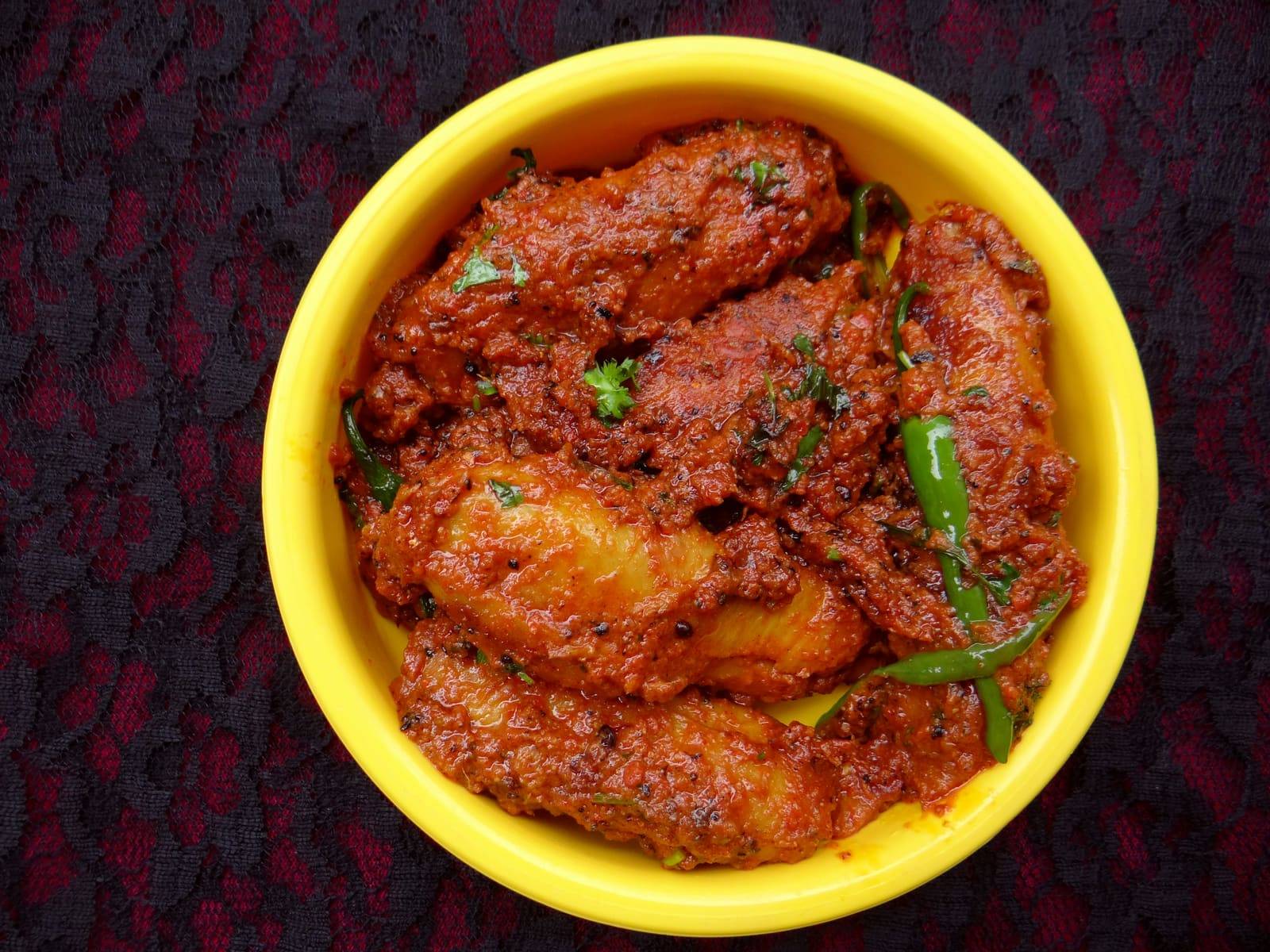
One katori of soya chaap masala, 150 g, has about 216 calories, 9.4 g of protein and 12.6 g of fat; one cup (240 g) has about 345. One 50 g stick on its own is 56 calories. A home tandoori plate of 6 pieces is 471, and a restaurant malai plate of 6 pieces is 837.
216calories
Protein
9.4 g
Carbs
17.6 g
Fat
12.6 g
1 cup = a 240 ml US cup of the dish as served. UK, Canadian and Australian cups are 250 ml: add about 4%.
Founding 500
Your bowl is not exactly 150 g.
Katori is an iPhone app that counts your actual plate from one photo. Built for Indian food first.
No spam. One email at launch, then only if it matters. Privacy.
First 500 sign-ups get the badge, paid or free. 10% off Pro annual, expires 30 days after launch, replaces the trial.
About soya chaap
Soya chaap is a North Indian vegetarian dish of chewy sticks made from soy flour and wheat flour, sold boiled, frozen or canned in brine and then cooked in a masala, roasted in a tandoor or simmered in cream as malai chaap. Our headline is a katori of soya chaap masala: 75 g of chaap in an onion and tomato masala with 7 g of oil, 10 g of cream and 5 g of cashew. The chaap brings 39 percent of the katori's calories, the cream and cashew 26 percent, the oil 29 percent and the onion and tomato 6 percent. USDA has no record for chaap, so the stick is our stated recipe, at medium confidence.
Home vs takeout
Each row is 150 g of the cooked dish. The masala is the gravy katori; the tandoori rows are dry, marinated in curd and roasted, and the restaurant one is fried first; malai chaap is the cream, cashew and butter version a restaurant serves.
| Version | 1 katori | 1 cup | Protein, 1 cup |
|---|---|---|---|
| Soya chaap masala, homeHeadlineOnion, tomato, a little cream and cashew. | 216 | 345 | 15.0 g |
| Tandoori soya chaap, home (dry)Curd marinade and a brush of oil, roasted. | 214 | 343 | 23.9 g |
| Tandoori soya chaap, restaurant (fried first)Fried, then finished in the tandoor. | 290 | 463 | 22.3 g |
| Malai soya chaap, restaurantCream, cashew and butter. | 299 | 478 | 22.0 g |
What soya chaap is made of
A chaap stick is a dough of wheat flour and soy flour, rolled around a wooden stick and boiled. A packaged chaap label photographed on our nutrition data audit lists water first, then wheat flour, then soya bean flour and gluten, so it is not 100 percent soya. Our stick follows that order: per 100 g, 68 g of water, 17 g of refined wheat flour, 11 g of defatted soy flour and 4 g of wheat gluten. The proportions are our assumption; makers do not print them.
On that recipe a stick is 113 calories and 10.4 g of protein per 100 g. The wheat flour brings 55 percent of its calories, the soy flour 32 percent and the gluten 13 percent, while the soy flour carries 54 percent of the protein. That is why chaap is a fair protein source rather than a pure soya one.
Why the soya chaap numbers you find disagree
Most of a chaap stick is water, and water carries no calories. Our stick is 68 percent water by weight; the flours alone, with the water taken out, come to 352 calories and 32.6 g of protein per 100 g. A stick that has sat in brine, or been boiled longer, holds more water and less flour in each 100 g, so the same chaap reads lighter on one pack than on another.
The unit moves the number more than the brand does. One 50 g stick is 56 calories, 100 g is 113, a katori of the masala is 216 and a home plate of 6 tandoori pieces is 471. A protein figure is the same story: a katori of masala holds 75 g of chaap, which gives 7.8 g of its 9.4 g of protein. A figure quoted for dry soy flour, 51.5 g of protein per 100 g, describes the flour before wheat and water dilute it.
Protein in 4 pieces and a plate
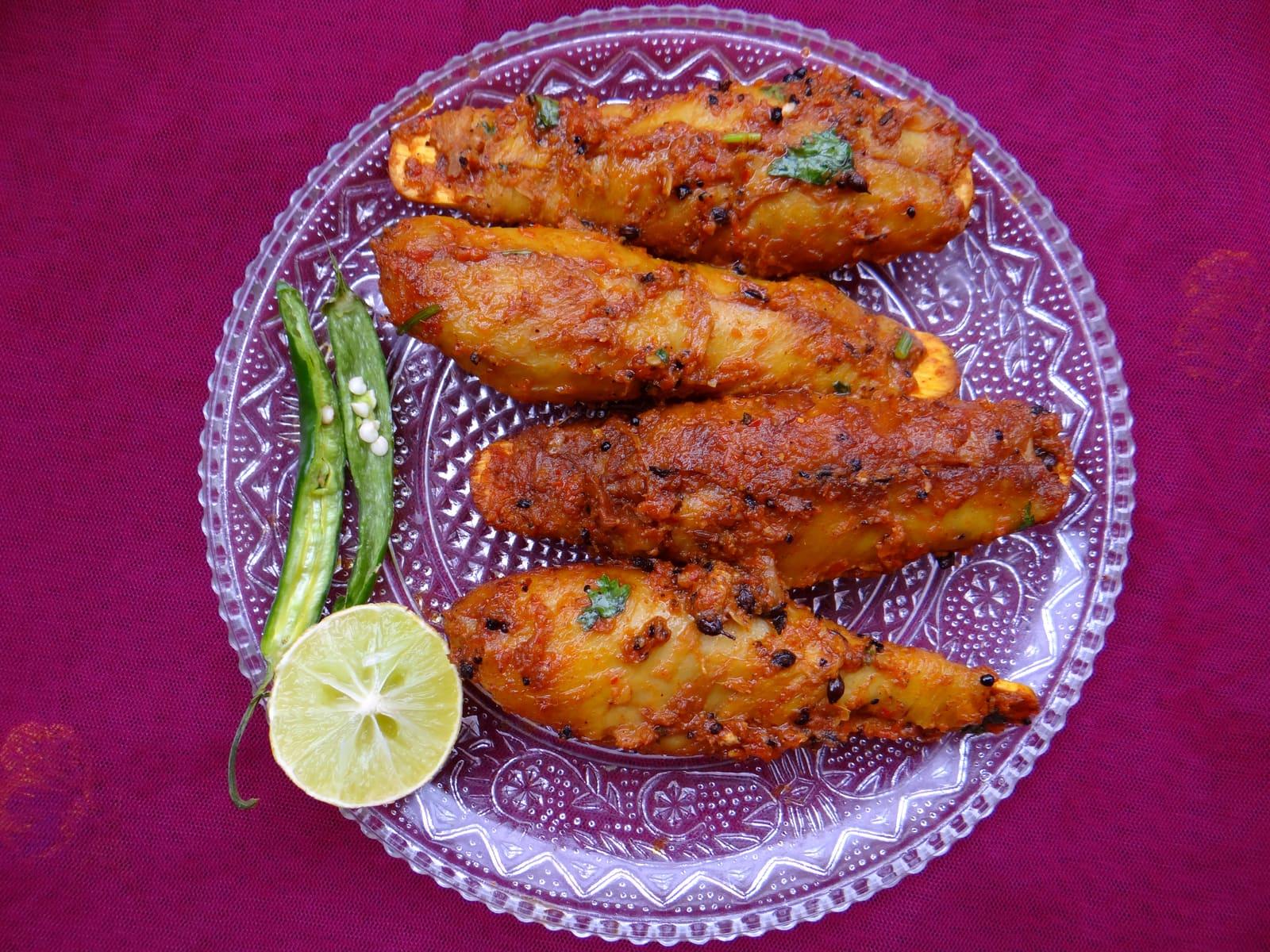
We count a tandoori piece as one stick, 50 g of chaap, which comes off the grill at 55 g with 79 calories and 5.5 g of protein. Four pieces are 220 g, 314 calories and 21.9 g of protein; a plate of 6 is 330 g, 471 calories and 32.8 g of protein. Restaurants cut sticks differently, so count your pieces against the size of the stick.
Is tandoori soya chaap fried?
At home it usually is not: the chaap is marinated in curd, brushed with 4 g of oil for every 100 g and roasted, 157 calories for the 110 g that comes out. Many restaurants fry the sticks first so they hold their shape in the tandoor, and our restaurant version takes up 8 g more oil per 100 g of chaap, 228 calories. Over a plate of 6 pieces that is 24 g of oil and 212 calories more, 684 in all, with 38.6 g of fat against 14.6 g.
A meta-analysis of 17 observational studies found that people who ate the most fried food had a relative risk of 1.28 for major cardiovascular events, against those who ate the least. It shows an association across diets, not the effect of one plate.[12]
Soya chaap vs paneer
Gram for gram, paneer is the richer food: 321 calories, 23.2 g of protein and 25.0 g of fat per 100 g, from the median of four US paneer labels, against 113 calories, 10.4 g and 0.4 g for our chaap stick. Per calorie the stick carries more protein, 9.3 g for every 100 calories against 7.2 g for paneer, because most of what paneer adds is fat.
On the plate, a home tandoori soya chaap of 6 pieces gives 7.0 g of protein per 100 calories. Our restaurant paneer tikka plate gives 6.1 g and our restaurant chicken tikka plate 13.6 g.
Soya chaap from a restaurant: takeout and takeaway
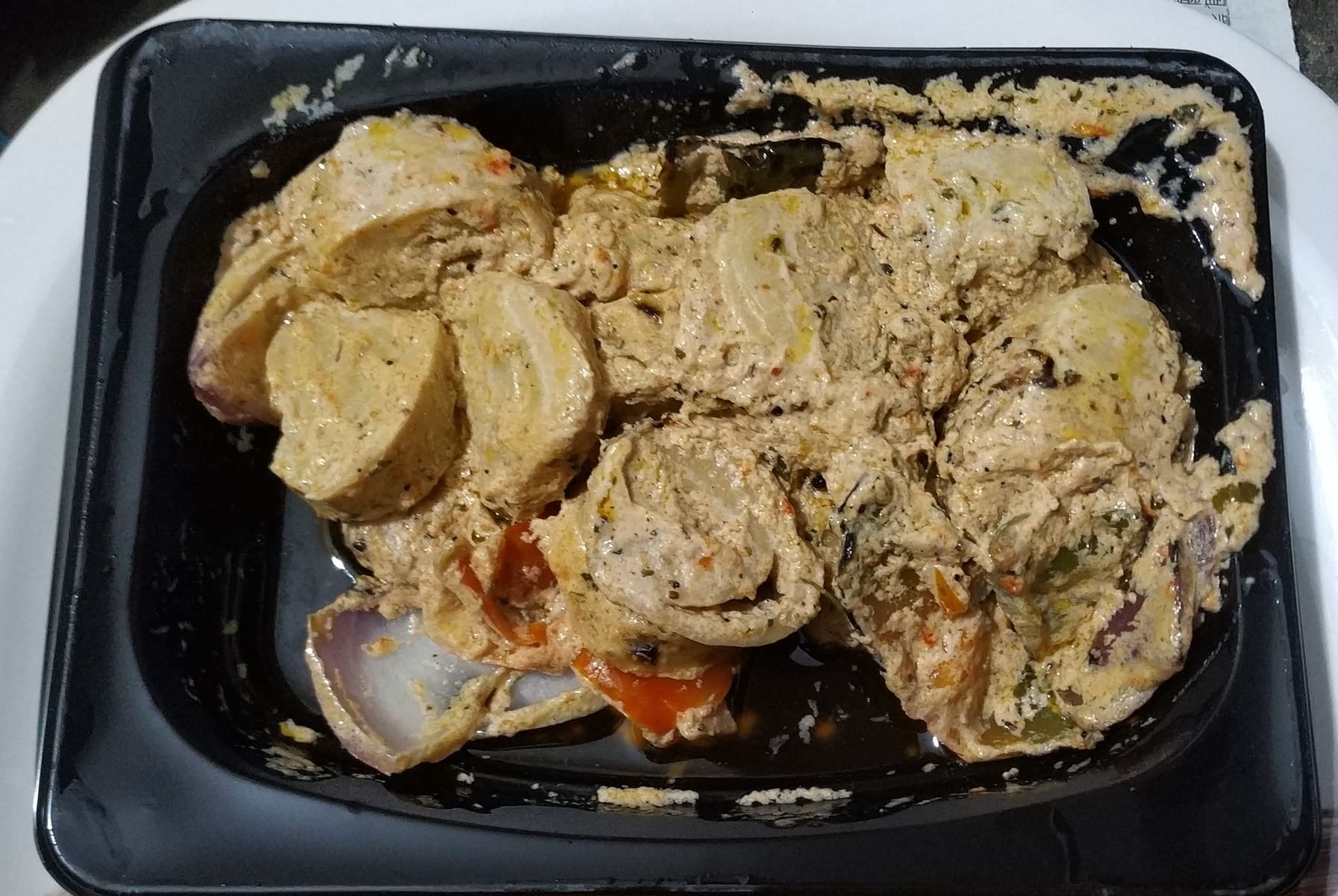
Malai chaap is where a restaurant adds the most: for every 100 g of chaap it takes 25 g of cream, 6 g of butter and 8 g of cashew, 279 calories and 16.8 g of fat in 140 g. That is 122 calories more than the same chaap roasted at home. A takeout tandoori chaap that was fried first sits between the two.
Measured in the lab, US restaurant meals averaged 1,205 calories each, which is why the restaurant rows above run higher than the home ones: the oil, butter and cream, not the chaap, make the difference. Ask whether the tandoori is fried, and a takeaway order of masala or tandoori chaap stays closer to the home figures than malai.
In ounces and cups
For readers in the US, UK, Canada and Australia: a 150 g katori is 5.3 oz, and a US cup of the masala, 240 g, is 345 calories with 15.0 g of protein. UK, Canadian and Australian cups hold 250 ml, a little more. One stick is 1.8 oz, and a home plate of 6 tandoori pieces is 11.6 oz.
Is soya chaap healthy?
On its own numbers the masala katori is a moderate dish: 9.4 g of protein, 4.4 g per 100 calories, 2.6 g of fibre and 3.5 g of saturated fat, most of it from the cream. What pushes chaap down is the refined wheat flour, 55 percent of the stick's calories in our recipe, and frying, which adds oil before the tandoor. Canned chaap sits in brine; the label photographed on our audit tells you to squeeze and rinse it before use, and our numbers count no added salt.
One katori of soya chaap carries 9.4 g of protein and 12.6 g of fat, 3.5 g of it saturated: 4.4 g of protein for every 100 calories. The ghee page sets the NHS and American Heart Association limits for saturated fat side by side.
Soya chaap vs related dishes
| Dish | 1 katori | 1 cup | Protein, 1 katori |
|---|---|---|---|
| Soya chaap | 216 | 345 | 9.4 g |
| Chana masala | 237 | 380 | 8.7 g |
Every row is home cooking, the version every dish has, so the rows compare like with like. Restaurant and dhaba figures are on each dish page and in the calculator.
Related guide: High-Protein Indian Foods, Ranked Per Serving
How we calculated this
Every number on this page is for 1 katori (150 g), worked out from the recipe below. Cup and 100 g figures are scaled from it.
Correction, November 9, 2026: this page listed a katori of soya chaap masala at 226 calories and 9.2 g of protein, typed by hand against packaged labels. It is now computed from a stated recipe, with the chaap stick stated in grams of flour and water because USDA has no soya chaap record: 216 calories and 9.4 g of protein.
- Soya chaap75 g
- Onion20 g
- Tomato25 g
- Soybean oil7 g
- Light whipping cream10 g
- Cashew5 g
- Water8 g
- Spices, salttrace
One katori of 150 g of soya chaap masala. The chaap is our stated stick: per 100 g, 68 g of water, 17 g of refined wheat flour, 11 g of defatted soy flour and 4 g of wheat gluten, each valued from its USDA record. One stick is counted as 50 g of chaap: that weight is our assumption, since no USDA label gives one, and like the stick recipe it is held at medium confidence. A tandoori or malai plate is 6 pieces, each one stick.
USDA FoodData Central SR Legacy for every ingredient. USDA has no soya chaap record and FoodData Central holds no chaap label, so the stick is a stated recipe at medium confidence.
Confidence: medium
Sources
- USDA FoodData Central 168894: Wheat flour, white, all-purpose, enriched, bleached
- USDA FoodData Central 174275: Soy flour, defatted
- USDA FoodData Central 168147: Vital wheat gluten
- USDA FoodData Central 170000: Onions, raw
- USDA FoodData Central 170457: Tomatoes, red, ripe, raw, year round average
- USDA FoodData Central 171411: Oil, soybean, salad or cooking
- USDA FoodData Central 170858: Cream, fluid, light whipping
- USDA FoodData Central 170162: Nuts, cashew nuts, raw
- USDA FoodData Central 170923: Spices, cumin seed
- USDA FoodData Central 171284: Yogurt, plain, whole milk
- USDA FoodData Central 173410: Butter, salted
- Qin P, Zhang M, Han M, et al. Fried-food consumption and risk of cardiovascular disease and all-cause mortality: a meta-analysis of observational studies. Heart, 2021;107(19):1567-1575.
Common questions
Is soya chaap healthy for weight loss?
A katori of the masala is 216 calories with 9.4 g of protein. Home tandoori chaap is lighter; malai chaap, with cream and butter, is the heaviest.
How many calories in 1 plate of soya chaap?
About 471 for a home plate of 6 tandoori pieces, 330 g, and 684 if the sticks are fried first.
How much protein is in 4 pieces of soya chaap?
About 21.9 g in 4 home tandoori pieces, 314 calories.
Which chaap is best for weight loss?
Tandoori chaap roasted without frying, at 157 calories per 100 g of chaap. Malai chaap is 279 for the same chaap.
What are the disadvantages of soya chaap?
The refined wheat flour in the stick, the oil when it is fried, the cream in malai chaap and the brine in canned chaap.
Is soya chaap healthier than paneer?
It has less fat and fewer calories per 100 g, 113 against 321, and more protein per calorie; paneer has more protein per gram.
What is soya chaap made of?
Wheat flour and soy flour made into a dough with water and boiled on a stick. It is not all soya.
How many calories in 1 katori of soya chaap?
About 216 for a katori of soya chaap masala, 150 g, with 9.4 g of protein.
These figures are estimates from stated recipes, for general information. They are not medical or dietary advice. If you manage a health condition, check with a registered dietitian or your doctor.
Related dishes
Founding 500
Be one of the original 500.
Permanent badge, plus 10% off your first year of Pro.
Snap one photo and get these numbers for your actual plate, not a generic entry. Built for Indian food first.
No spam. One email at launch, then only if it matters. Privacy.
First 500 sign-ups get the badge, paid or free. 10% off Pro annual, expires 30 days after launch, replaces the trial.