Veg pulao calories: cup/katori and 100 g
Also called vegetable pulao, pulao, veg pilaf and matar pulao.
By Shivam Verma Updated 8 sources linked below
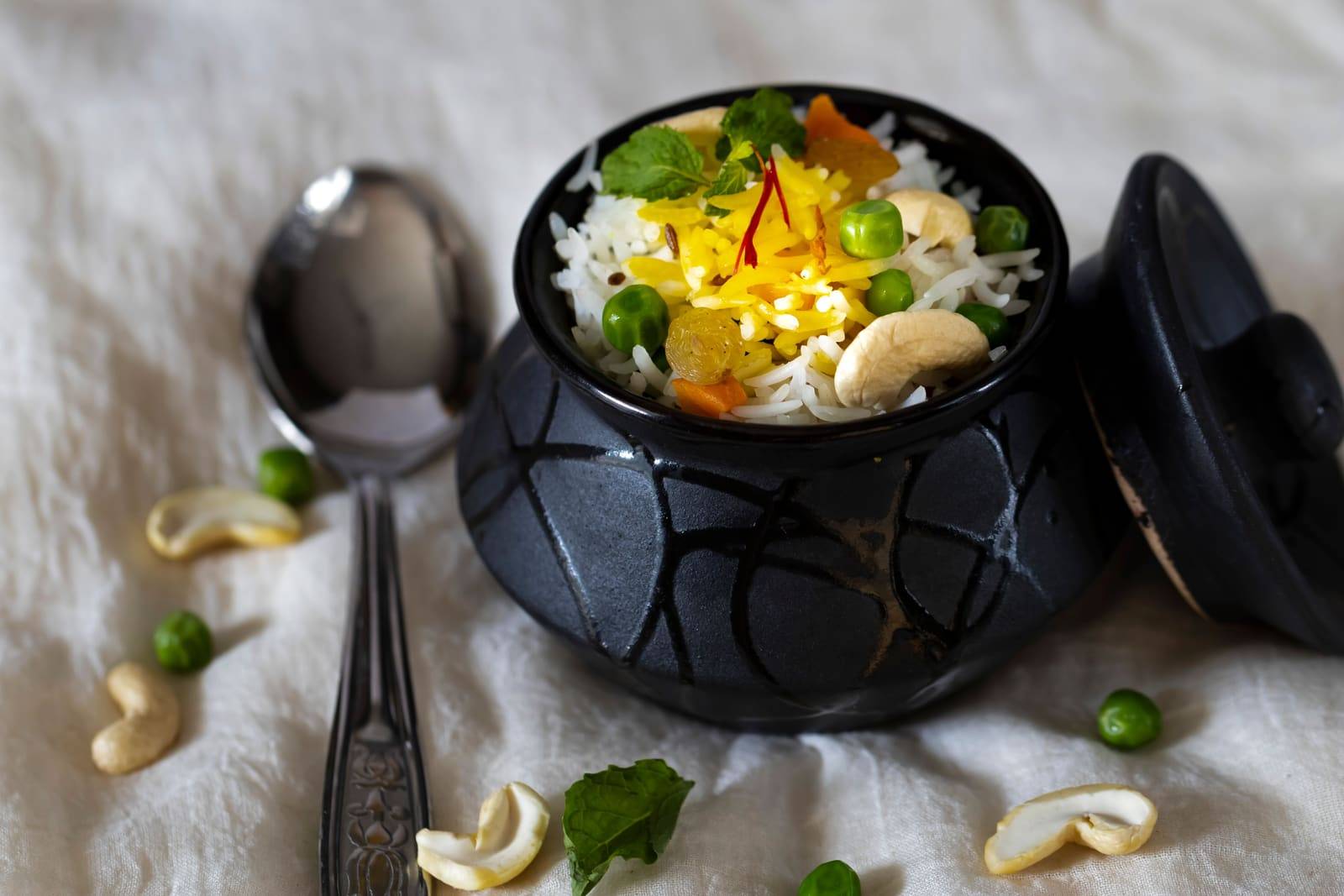
One katori of home veg pulao, 120 g, has about 167 calories, 3.1 g of protein and 4.3 g of fat. One cup (158 g) has about 219, and 100 g has 139. A restaurant katori with more ghee and a few cashews is 202; a light one, 153.
167calories
Protein
3.1 g
Carbs
28.3 g
Fat
4.3 g
1 cup = a 240 ml US cup of the dish as served. UK, Canadian and Australian cups are 250 ml: add about 4%.
Founding 500
Your bowl is not exactly 120 g.
Katori is an iPhone app that counts your actual plate from one photo. Built for Indian food first.
No spam. One email at launch, then only if it matters. Privacy.
First 500 sign-ups get the badge, paid or free. 10% off Pro annual, expires 30 days after launch, replaces the trial.
About veg pulao
Veg pulao is rice cooked with whole spices, a little ghee and a handful of vegetables: here peas, carrot and onion. It is milder and quicker than a biryani, with no marinade, no layering and no dum. Our home katori holds 90 g of cooked rice, 26 g of vegetables and 4 g of ghee. The rice brings 70 percent of the calories, the ghee 21 percent and the vegetables 9 percent, so the vegetables add colour and fibre far more than they add calories.
Home vs takeout
The vegetables stay the same in all three katoris; the ghee moves. The light katori uses 2 g, home 4 g, and the restaurant katori 7 g with 3 g of cashews.
| Version | 1 katori | 1 cup | Protein, 1 cup |
|---|---|---|---|
| HomeHeadlinePeas, carrot and onion with a little ghee. | 167 | 219 | 4.1 g |
| Restaurant, more ghee and cashewsRicher tempering, cashews on top. | 202 | 266 | 4.6 g |
| Light, half the gheeMore rice, less ghee. | 153 | 201 | 4.2 g |
Pulao against biryani
By the portion, pulao is far lighter, because it comes in a katori and biryani comes on a plate. A katori of home pulao is 167 calories; a home plate of veg biryani, 300 g, is 447, and even a 150 g katori of that biryani is 224.
By the gram the gap is small, and it runs both ways. Per 100 g, home pulao is 139 calories against 149 for home veg biryani and 164 for home chicken biryani, so the home pulao is the lighter rice. The restaurant versions swap places: restaurant pulao is 168 per 100 g and restaurant veg biryani 162. Same-size servings of the two land close together; what makes a biryani the bigger meal is the plate it comes on.
Pilau rice from a takeaway
In a British or Irish takeaway, pulao is pilau rice. safefood's laboratory analysis of Indian takeaways measured the average pilau rice portion at 289 g and 496 calories, with 9.3 g of fat. Our restaurant pulao at the same weight is 486 calories, 2 percent under. The fat is not close: ours carries 20.7 g at that weight, so the measured pilau must hold more rice and less ghee per gram than our recipe.[8]
For a 200 g serving, safefood's figure scales to 343 calories and our restaurant pulao to 336.
Is veg pulao healthy?
A home katori is a rice dish with a small spoon of ghee and some vegetables, which bring its fibre to 1.3 g against 0.5 g in plain rice. On calories it sits between plain rice at 156 a katori and jeera rice at 181; the light pulao, at 153, comes in under plain rice. The cashews and the extra ghee are what turn the restaurant katori into 202 calories, with 3 g of cashew adding about 17 on their own.
One katori of veg pulao carries 3.1 g of protein and 4.3 g of fat, 2.6 g of it saturated: 1.9 g of protein for every 100 calories. The ghee page sets the NHS and American Heart Association limits for saturated fat side by side.
| Dish | 1 katori | 1 cup | 100 g | Protein, 100 g | Fat, 100 g |
|---|---|---|---|---|---|
| Rice | 156 | 205 | 130 | 2.7 g | 0.3 g |
| Jeera rice | 181 | 238 | 151 | 2.8 g | 2.9 g |
| Veg pulao | 167 | 219 | 139 | 2.6 g | 3.6 g |
Calories for each as cooked at home. A katori of rice is counted at its served weight and a cup at USDA's 158 g for cooked long-grain rice, the same for all three.
Veg pulao vs related dishes
| Dish | 1 katori | 1 cup | Protein, 1 katori |
|---|---|---|---|
| Veg pulao | 167 | 219 | 3.1 g |
| Rice | 156 | 205 | 3.2 g |
| Jeera rice | 181 | 238 | 3.3 g |
Every row is home cooking, the version every dish has, so the rows compare like with like. Restaurant and dhaba figures are on each dish page and in the calculator.
How we calculated this
Every number on this page is for 1 katori (120 g), worked out from the recipe below. Cup and 100 g figures are scaled from it.
Correction, October 23, 2026: rebuilt from a stated recipe using USDA FoodData Central values, with the rice weighed cooked and any meat weighed raw. One katori (120 g) of veg pulao was 200 calories; it is now 167.
Correction, September 2026: we previously listed one katori of rice as 150 g and 195 calories. Our own katori guide and USDA density data put a lightly packed 150 ml katori at about 120 g, so we corrected rice, jeera rice, and veg pulao to 120 g per katori.
- White rice, cooked90 g
- Green peas10 g
- Carrot10 g
- Onion6 g
- Ghee4 g
- Whole spices: bay leaf, cloves, cardamom, cinnamontrace
One katori of home veg pulao, 120 g: cooked long-grain rice with peas, carrot and onion in ghee, the whole spices counted as traces.
USDA FoodData Central SR Legacy for the rice, vegetables, ghee and cashews, with safefood's laboratory analysis of takeaway pilau rice for comparison.
Confidence: high
Sources
- USDA FoodData Central 168878: Rice, white, long-grain, regular, enriched, cooked
- USDA FoodData Central 170419: Peas, green, raw
- USDA FoodData Central 170393: Carrots, raw
- USDA FoodData Central 170000: Onions, raw
- USDA FoodData Central 173412: Butter oil, anhydrous
- USDA FoodData Central 170923: Spices, cumin seed
- USDA FoodData Central 170162: Nuts, cashew nuts, raw
- safefood. What's in your Indian takeaway? Laboratory analysis of 280 takeaway samples from 36 outlets, September 2015.
Common questions
How many calories in a katori of veg pulao?
About 167 for a home katori of 120 g, with 3.1 g of protein. A restaurant katori is 202.
How many calories in 1 cup of veg pulao?
About 219 for a home cup and 266 for a restaurant cup, each 158 g.
Is pulao lower in calories than biryani?
Per serving, yes: a katori of home pulao is 167 and a home plate of veg biryani 447. Gram for gram the two are close, 139 against 149 per 100 g at home.
How many calories in 200 g of pilau rice?
About 336 for our restaurant pulao, and 343 on safefood's measured takeaway pilau.
Is veg pulao good for weight loss?
A home katori is 167 calories and 4.3 g of fat; the light katori, with 2 g of ghee, is 153 with 2.3 g.
Does veg pulao have more protein than plain rice?
Slightly less: 3.1 g a katori against 3.2 g for plain rice. The vegetables and ghee take the place of some rice, and a few peas and carrot pieces do not make up the difference.
How many calories in 100 g of veg pulao?
139 at home and 168 in a restaurant.
These figures are estimates from stated recipes, for general information. They are not medical or dietary advice. If you manage a health condition, check with a registered dietitian or your doctor.
Related dishes
Founding 500
Be one of the original 500.
Permanent badge, plus 10% off your first year of Pro.
Snap one photo and get these numbers for your actual plate, not a generic entry. Built for Indian food first.
No spam. One email at launch, then only if it matters. Privacy.
First 500 sign-ups get the badge, paid or free. 10% off Pro annual, expires 30 days after launch, replaces the trial.