Mango lassi calories, plus sweet and salted lassi
Also called meethi lassi and namkeen lassi.
By Shivam Verma Updated 10 sources linked below
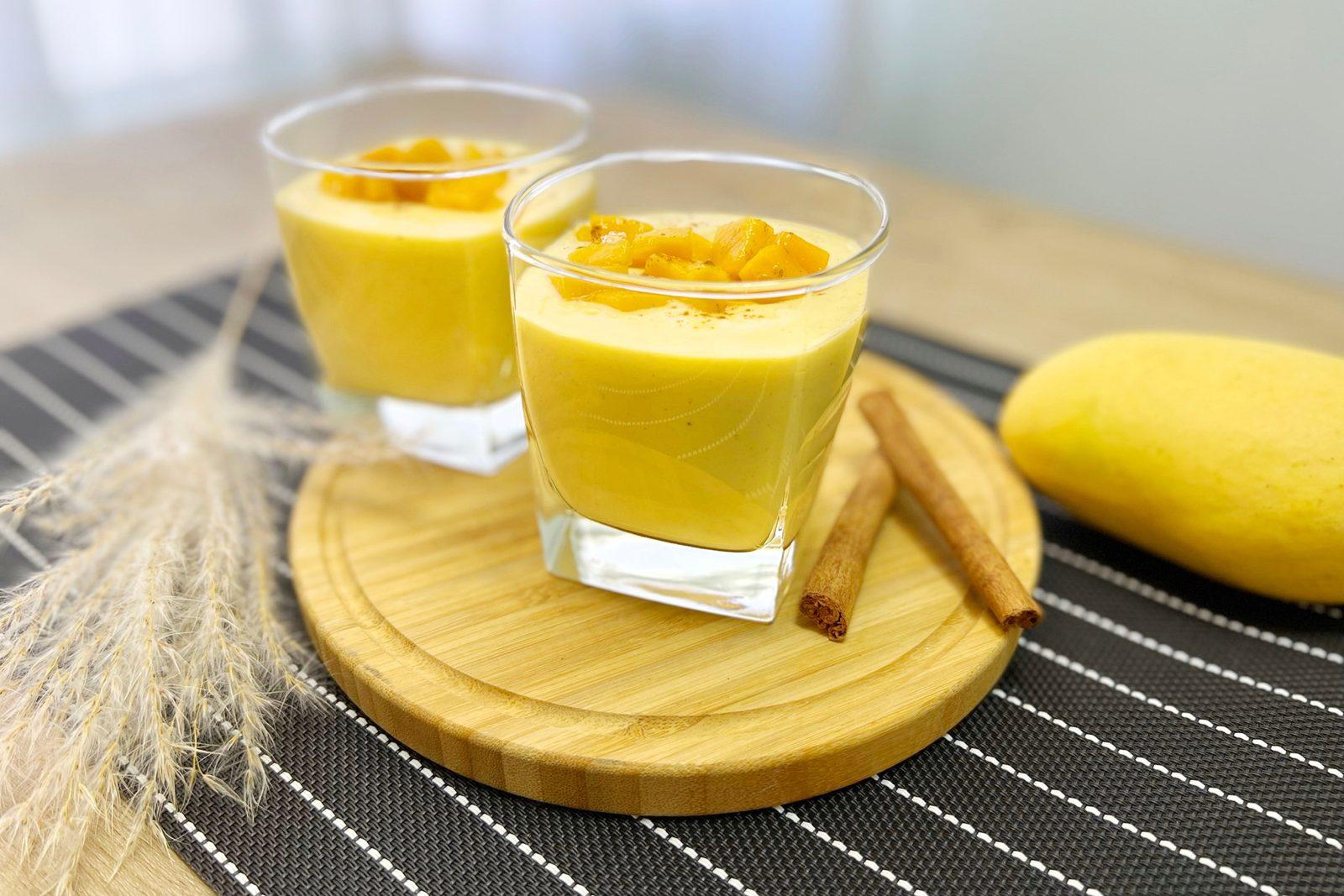
One home mango lassi, a 250 ml glass (245 g), has about 198 calories, 5.8 g of protein and 5.2 g of fat, or 81 per 100 g, with 15.0 g of added sugar. A sweet lassi is 199, a salted lassi 92, and a 330 ml restaurant mango lassi 282.
198calories
Protein
5.8 g
Carbs
34.0 g
Fat
5.2 g
Founding 500
Your plate is not exactly 245 g.
Katori is an iPhone app that counts your actual plate from one photo. Built for Indian food first.
No spam. One email at launch, then only if it matters. Privacy.
First 500 sign-ups get the badge, paid or free. 10% off Pro annual, expires 30 days after launch, replaces the trial.
About lassi
Lassi is curd churned or blended until smooth and thinned to a drink, the Punjabi summer glass. Sweet lassi takes sugar and a splash of milk; salted lassi, namkeen, takes water, salt and roasted cumin; mango lassi blends in ripe mango. Our sweet glass is 150 g of whole milk curd, 50 g of milk, 20 g of sugar and a little water. The curd is constant across the glasses; the sugar and the fruit are what change.
Home vs takeout
The four glasses share a curd base. Sweet lassi adds sugar and milk; salted lassi only water; the home mango lassi 80 g of mango with some sugar; the restaurant glass is larger, with more of everything.
| Version | 1 glass | Protein, 1 glass |
|---|---|---|
| Mango lassi, homeHeadlineCurd, mango, a little sugar. | 198 | 5.8 g |
| Sweet lassi (250 ml)Curd, milk and sugar. | 199 | 6.8 g |
| Salted lassiCurd and water, salt and cumin. | 92 | 5.2 g |
| Mango lassi, restaurant (330 ml)A larger, sweeter glass. | 282 | 7.7 g |
Sweet, salted or mango
Of a sweet lassi's 199 calories, the curd brings 46 percent, the milk 15 percent and the sugar 39 percent. Its 20 g of added sugar is about 4.8 teaspoons, and the glass holds 29.5 g of sugars in all once the milk sugar in the curd and milk is counted.
Salted lassi drops the sugar and the milk: 92 calories, 5.2 g of protein and 7.0 g of sugars, every gram of them from the curd itself. It is the lightest glass by a distance, and it keeps the curd's protein: 5.2 g against 6.8 g in the sweet glass, which adds milk.
A home mango lassi is 198 calories for 245 g: curd 37 percent, mango 24 percent, milk 9 percent and sugar 30 percent. It has 15.0 g of added sugar, about 3.6 teaspoons, and 33.0 g of sugars in all, because the fruit brings its own.
The restaurant glass
A restaurant mango lassi is usually the bigger glass, 330 ml in ours, and sweeter: 282 calories, 84 more than the home glass, with 25.0 g of added sugar, about 6.0 teaspoons, and 48.8 g of sugars in all. That is more added sugar than one gulab jamun, 9.0 g on our recipe, or one jalebi, 9.6 g.
Gram for gram the two mango glasses are close, 85 calories per 100 g against 81 at home; the difference in the glass is mostly its size and its extra sugar.
Per 100 g a sweet lassi is 80 calories, more than the whole milk curd it is made from at 61, because of the sugar; a salted lassi, thinned with water, is 37.
Lassi with a meal
In Punjab a glass of lassi often comes with the meal rather than after it. A sweet lassi with a plate of home chole bhature is 961 calories, the lassi 21 percent of it; with a home aloo paratha, 441. A salted glass in place of the sweet one takes off the sugar and the milk and keeps all of the curd.
Is mango lassi good for you?
On its own numbers it is a drink with real protein, 5.8 g a home glass and 7.7 g a restaurant one, from the curd, and a lot of sugar. A sweet lassi carries 3.4 g of protein per 100 calories and 4.1 g of saturated fat, from whole milk curd. Where the sugar sits against the health bodies' advice is in the table below; the salted glass has no added sugar at all. A cup of chai, by comparison, is 77 calories.
Per 100 calories a salted lassi carries 5.7 g of protein, against 3.4 g for the sweet glass, because no sugar dilutes it; a cup of chai carries 2.4 g in all. One sweet glass is 80 percent of the 25 g of free sugars a day the World Health Organization gives as its lower aim, and a restaurant mango lassi 100 percent.
| Guideline | What it says | One glass of lassi, added sugar |
|---|---|---|
| World Health Organization | Free sugars under 10% of daily energy, ideally under 5%, which is about 25 g a day. | 15.0 g, 60% of 25 g |
| NHS (UK) | No more than 30 g of free sugars a day for adults. | 15.0 g, 50% of 30 g |
| American Heart Association | About 6 teaspoons of added sugar a day for women and 9 for men. | 3.6 tsp, against 6 (women) or 9 (men) |
| Heart & Stroke (Canada) | No more than 10% of daily calories from added sugars, ideally under 5%. On a 2,000 calorie day, 10% is about 48 g. | 15.0 g, 31% of 48 g |
| Australian Dietary Guidelines | Limit foods and drinks containing added sugars. No daily number is set. | 15.0 g |
One glass of lassi carries 5.8 g of protein and 5.2 g of fat, 3.2 g of it saturated: 2.9 g of protein for every 100 calories. The ghee page sets the NHS and American Heart Association limits for saturated fat side by side.
How we calculated this
Every number on this page is for 1 glass (250 ml), worked out from the recipe below. Piece and 100 g figures are scaled from it.
- Curd120 g
- Mango80 g
- Sugar15 g
- Whole milk30 g
One home mango lassi, a 250 ml glass of 245 g: whole milk curd, raw mango, sugar and whole milk. The mango is fresh, raw mango flesh; no water is lost in blending.
USDA FoodData Central SR Legacy for every ingredient, with the health bodies' added sugar guidance linked in the table. USDA has no survey record for lassi.
Confidence: high
Sources
- USDA FoodData Central 171284: Yogurt, plain, whole milk
- USDA FoodData Central 171265: Milk, whole, 3.25% milkfat, with added vitamin D
- USDA FoodData Central 169655: Sugars, granulated
- USDA FoodData Central 169910: Mangos, raw
- USDA FoodData Central 170923: Spices, cumin seed
- World Health Organization. WHO calls on countries to reduce sugars intake among adults and children, 2015.
- NHS. Sugar: the facts.
- American Heart Association. Added sugars.
- Heart & Stroke. Reduce sugar.
- National Health and Medical Research Council. Australian Dietary Guidelines 1 to 5.
Common questions
How many calories in a mango lassi?
About 198 for a home glass of 245 g, and 282 for a 330 ml restaurant glass.
How many calories in a glass of sweet lassi?
About 199 for a 250 ml glass with 20 g of sugar.
How many calories in salted lassi?
About 92 for the same glass, with 5.2 g of protein and no added sugar.
How much sugar is in a mango lassi?
15.0 g of added sugar in the home glass, about 3.6 teaspoons, and 25.0 g in the restaurant glass, about 6.0.
Is mango lassi good for you?
It brings 5.8 g of protein a home glass, and 15.0 g of added sugar. The salted glass, at 92 calories, has no added sugar.
Is salted lassi healthier than sweet lassi?
It is lighter: 92 calories against 199, with 4.9 g of fat against 6.5 g and none of the 20 g of added sugar.
How many calories in 100 g of lassi?
80 for sweet lassi.
How much protein is in lassi?
About 6.8 g in a glass of sweet lassi, most of it from the curd, and 5.2 g in a salted one, all of it from the curd.
These figures are estimates from stated recipes, for general information. They are not medical or dietary advice. If you manage a health condition, check with a registered dietitian or your doctor.
Related dishes
Founding 500
Be one of the original 500.
Permanent badge, plus 10% off your first year of Pro.
Snap one photo and get these numbers for your actual plate, not a generic entry. Built for Indian food first.
No spam. One email at launch, then only if it matters. Privacy.
First 500 sign-ups get the badge, paid or free. 10% off Pro annual, expires 30 days after launch, replaces the trial.